Wonder Women — Co-Founder & Head of Product, May 2022 – October 2024
Co-Founder & Head of Product
May 2022 – October 2024Status: Concluded
I co-founded Wonder Women to solve one of Pakistan’s biggest yet least discussed healthcare challenges — menstrual hygiene accessibility. From hardware engineering and software development to manufacturing, fundraising, and partnerships — I led the end-to-end execution of Asani.
We’re not just solving for access — we’re dismantling the silence, shame, and taboos that surround menstruation.
AccessibilityFor All
DignityFor Every Woman
Education& Awareness
SustainableImpact
What was Asani?
The Solution We Built
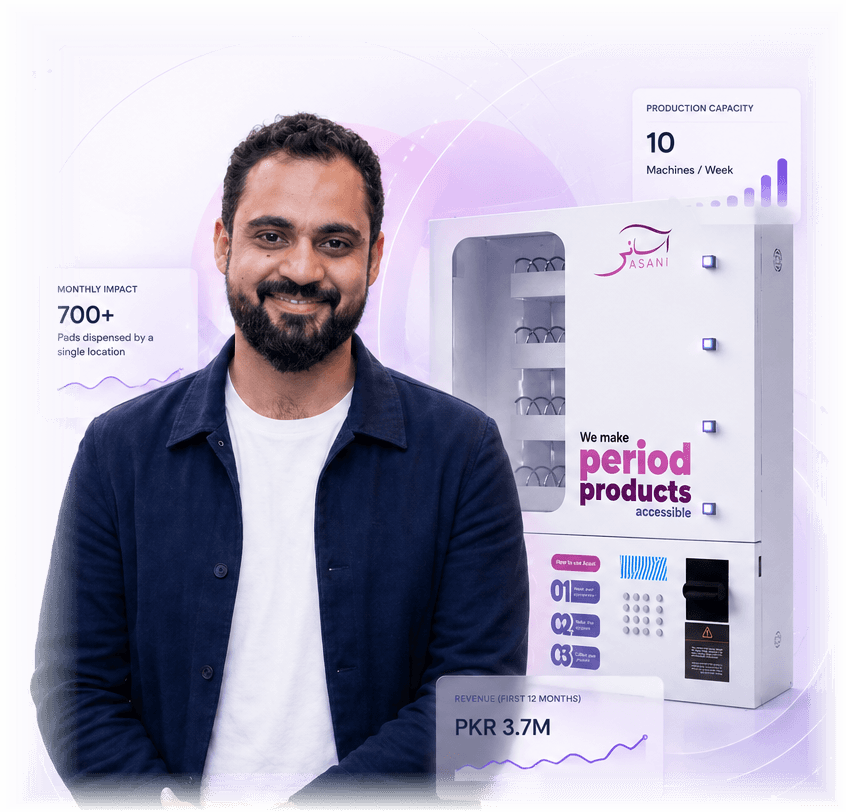
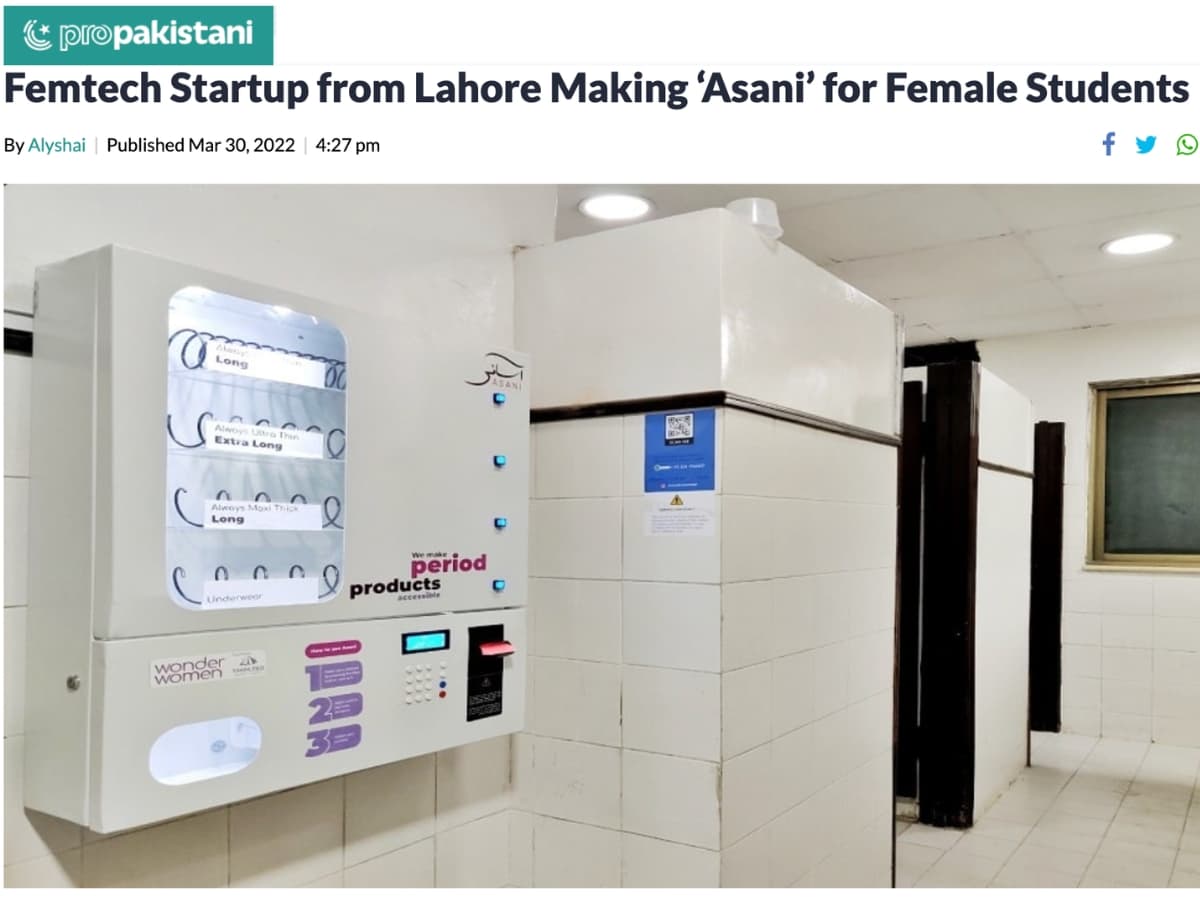
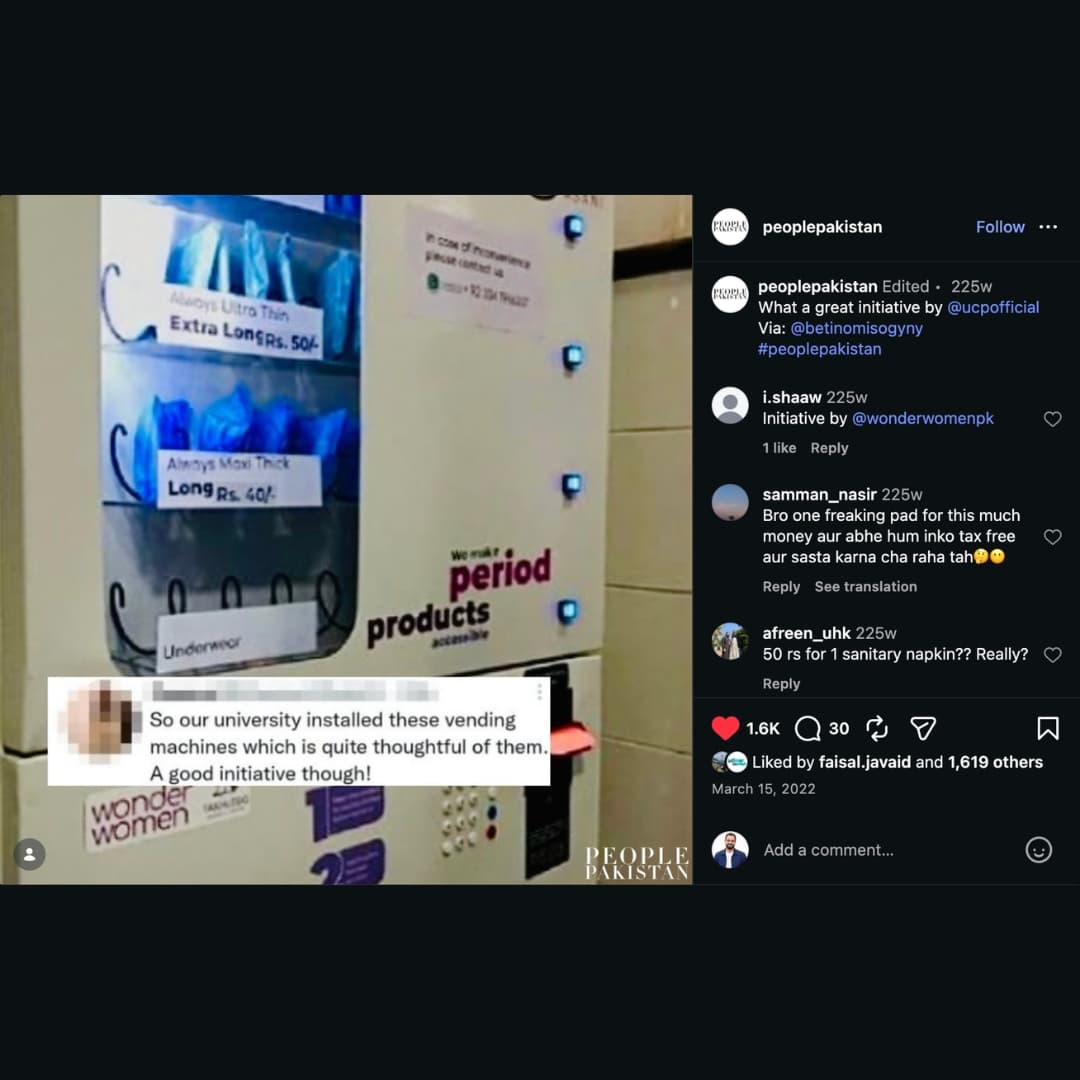
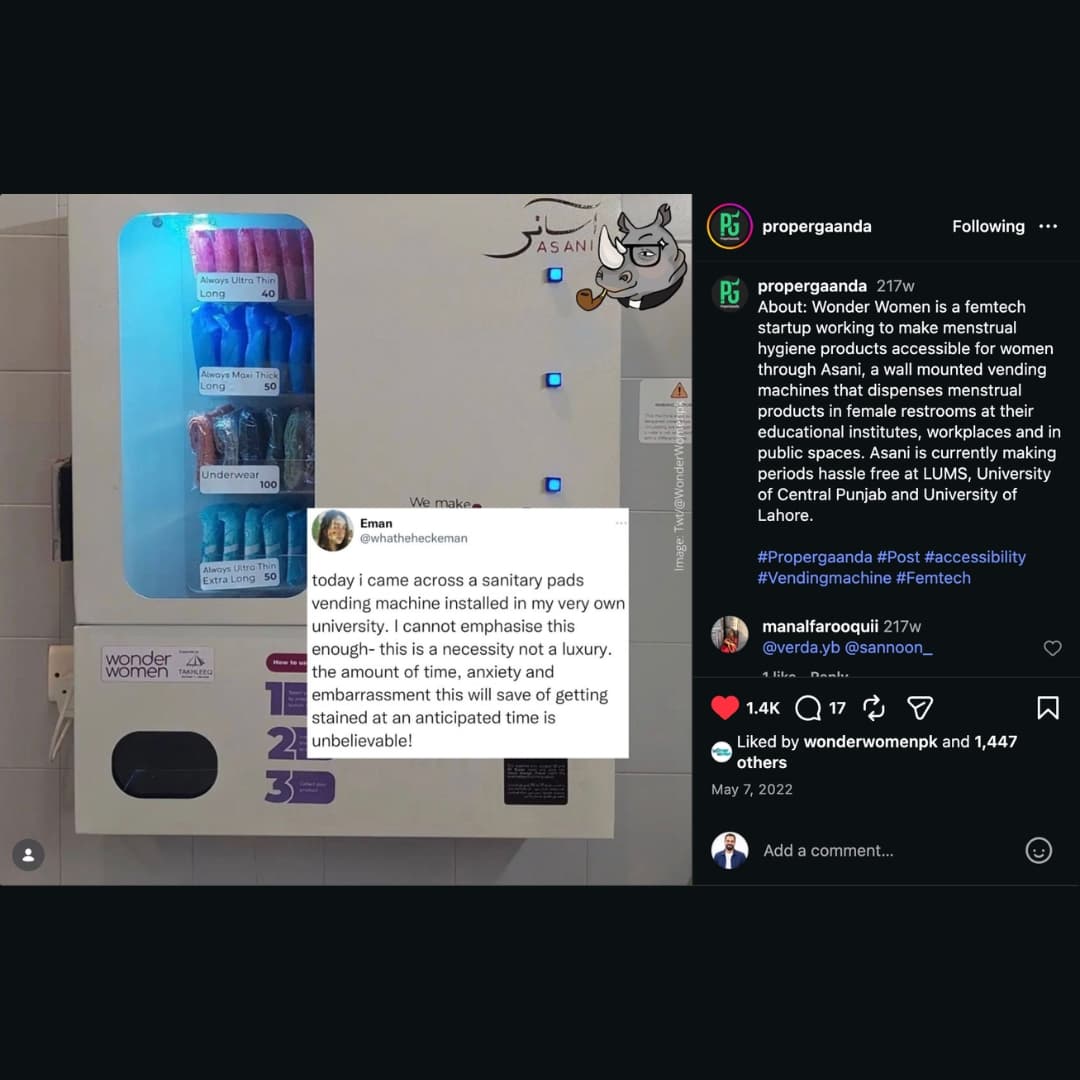
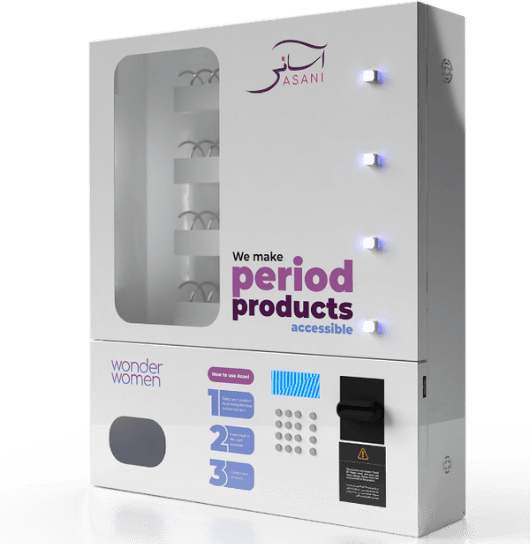
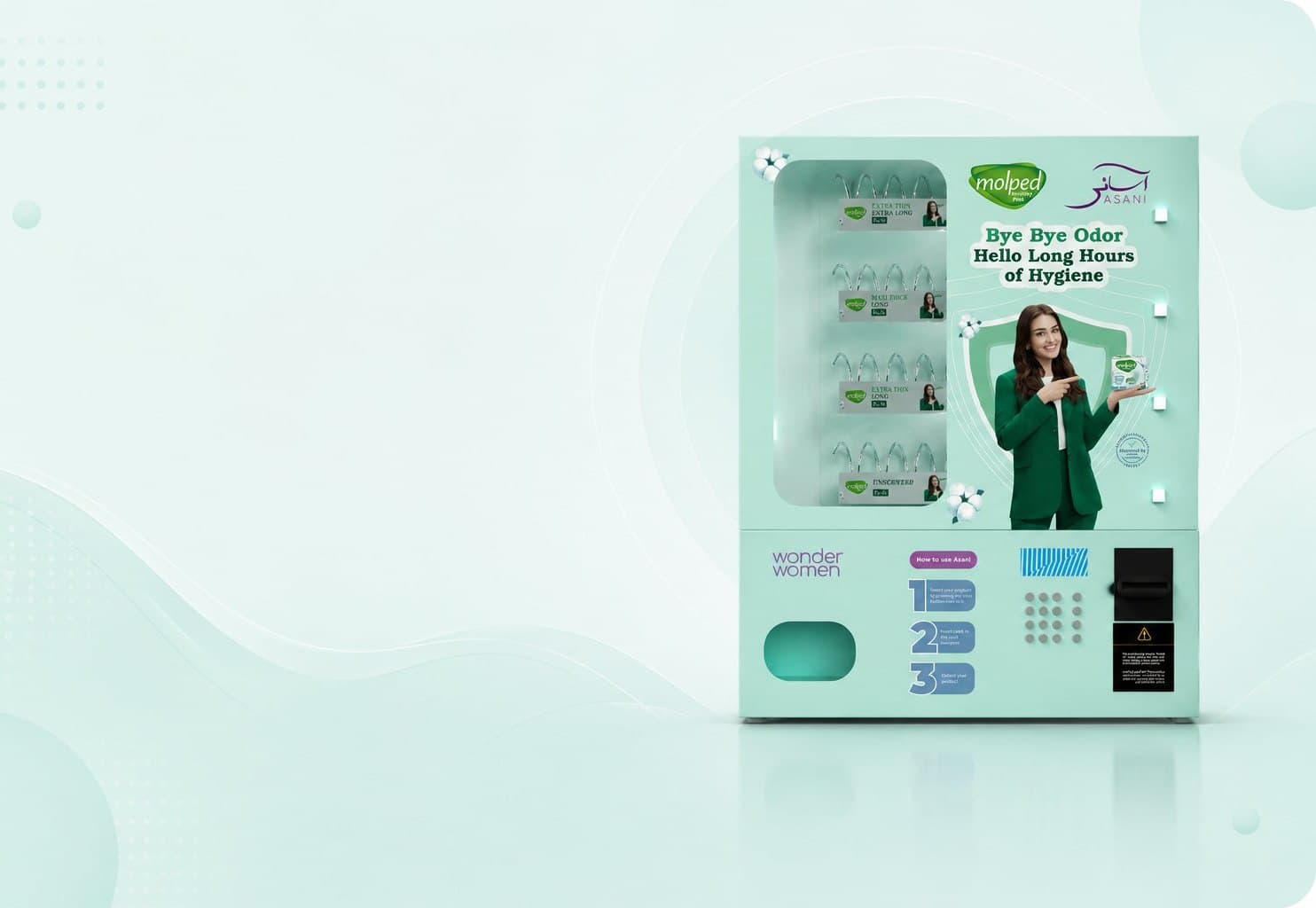
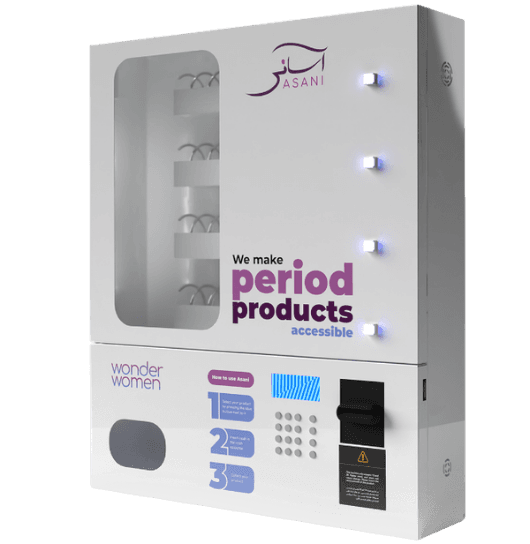
Asani is a wall-mounted smart vending machine that makes period products accessible, discreet, and convenient in female restrooms.
The Original Machine
Pakistan’s first locally-assembled wall-mounted sanitary-napkin vending machine.
4 rows, 56-pad capacity
Cash / PIN / App payment
~1/10th the cost of imports
2 weeks from confirmation to installation
Strategic Partnership
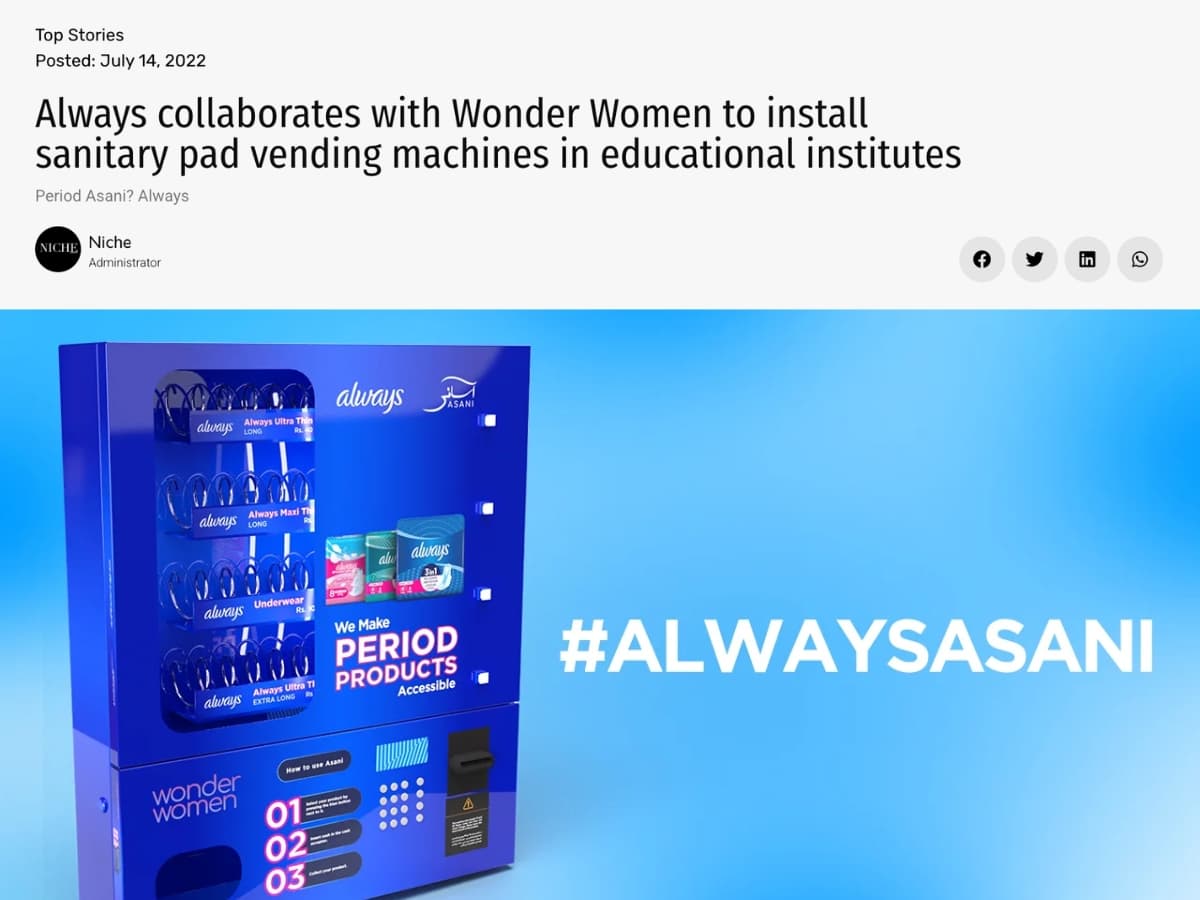
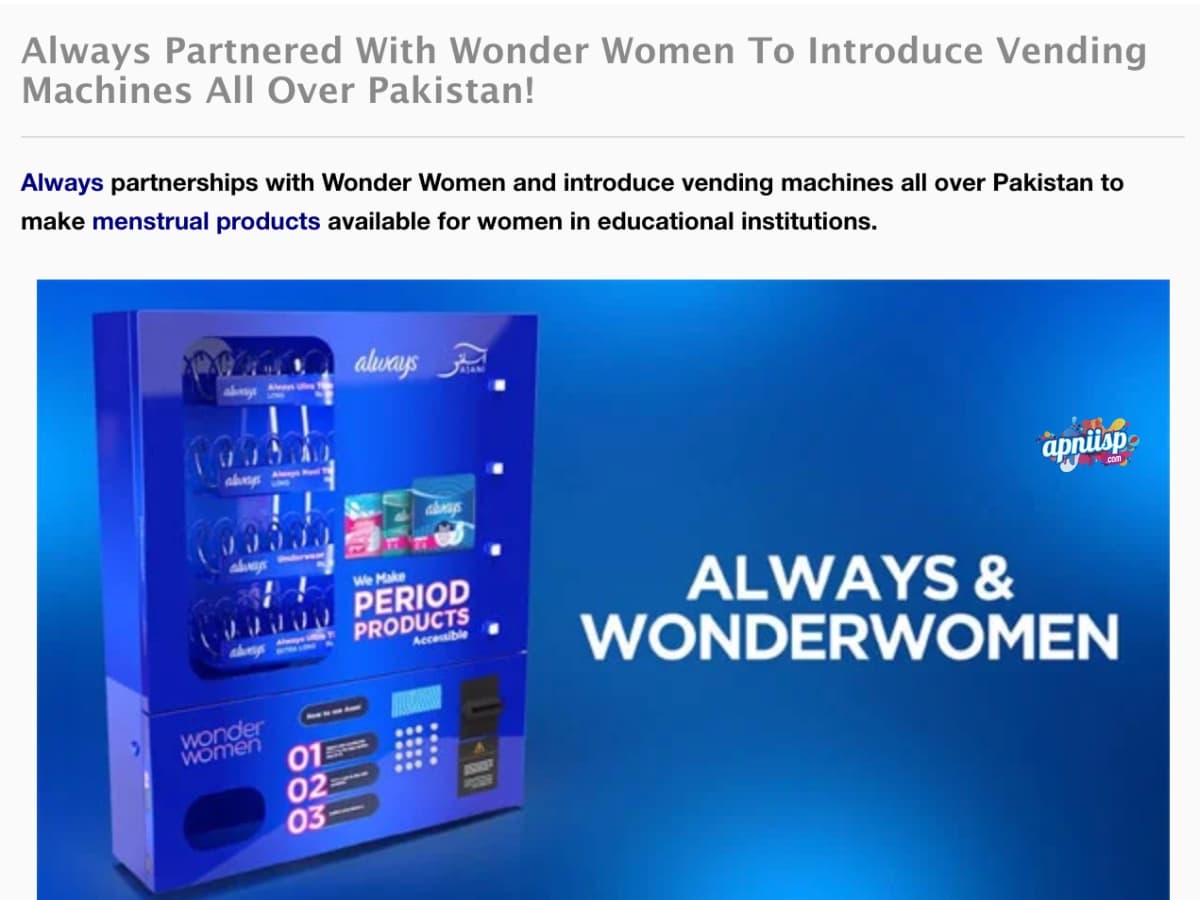
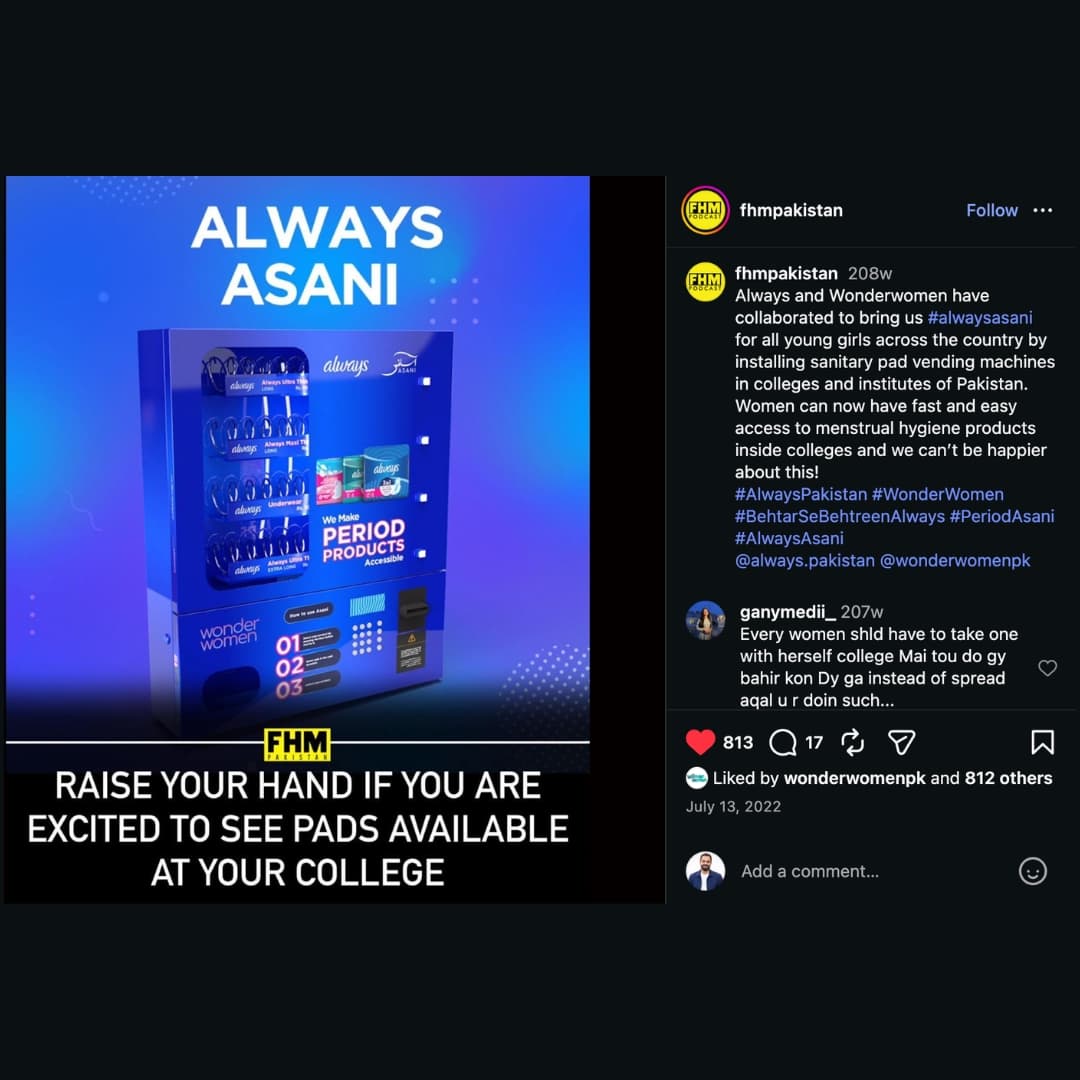
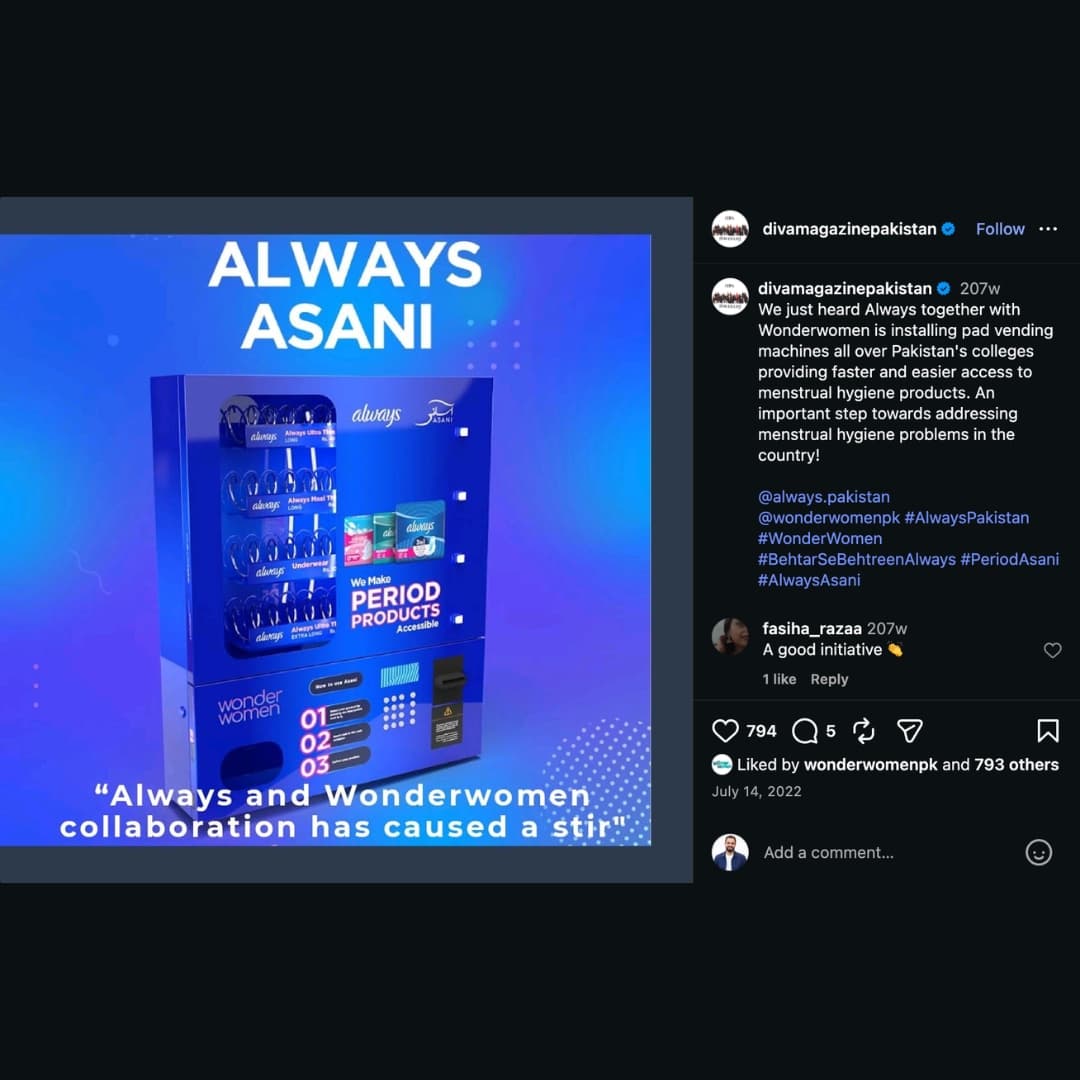
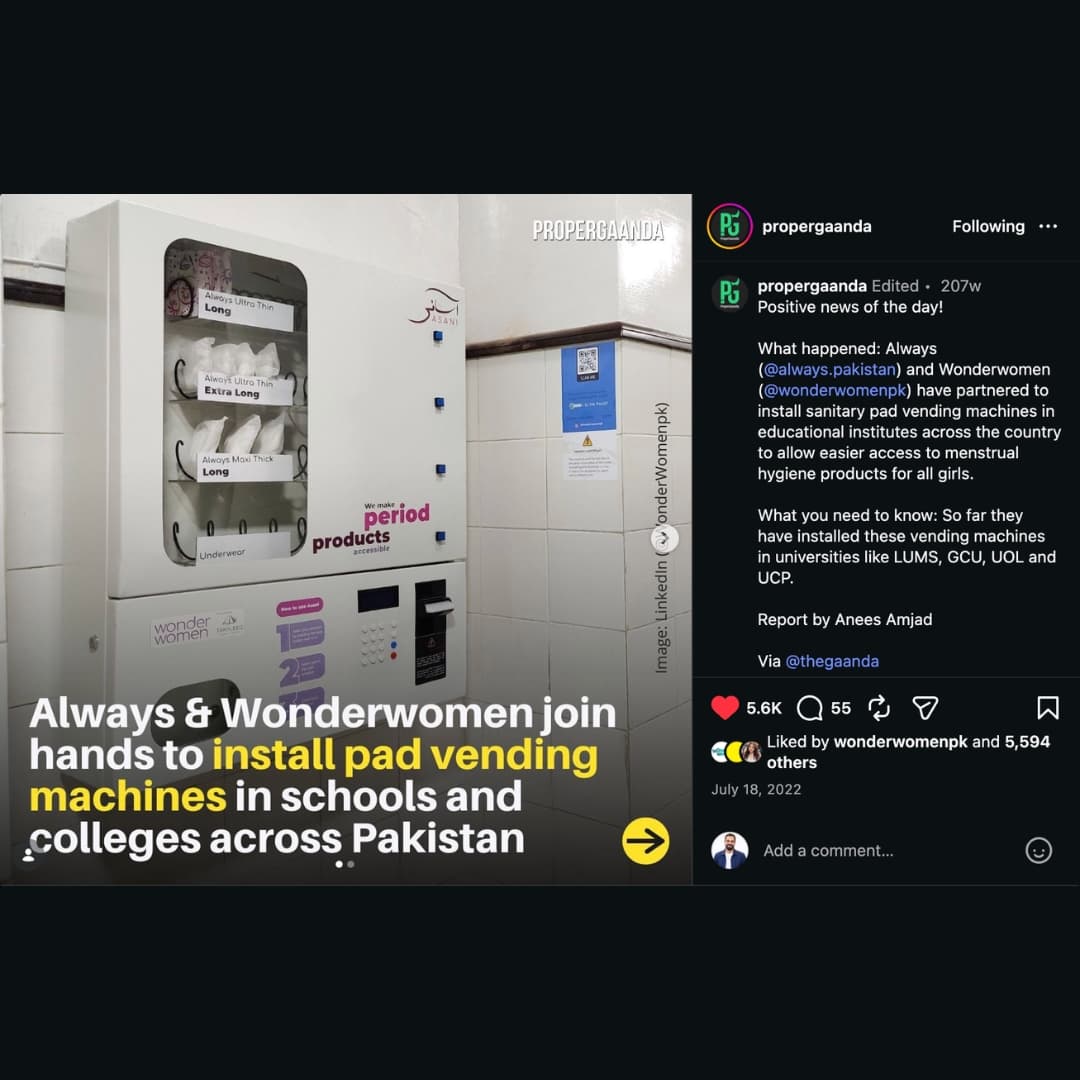
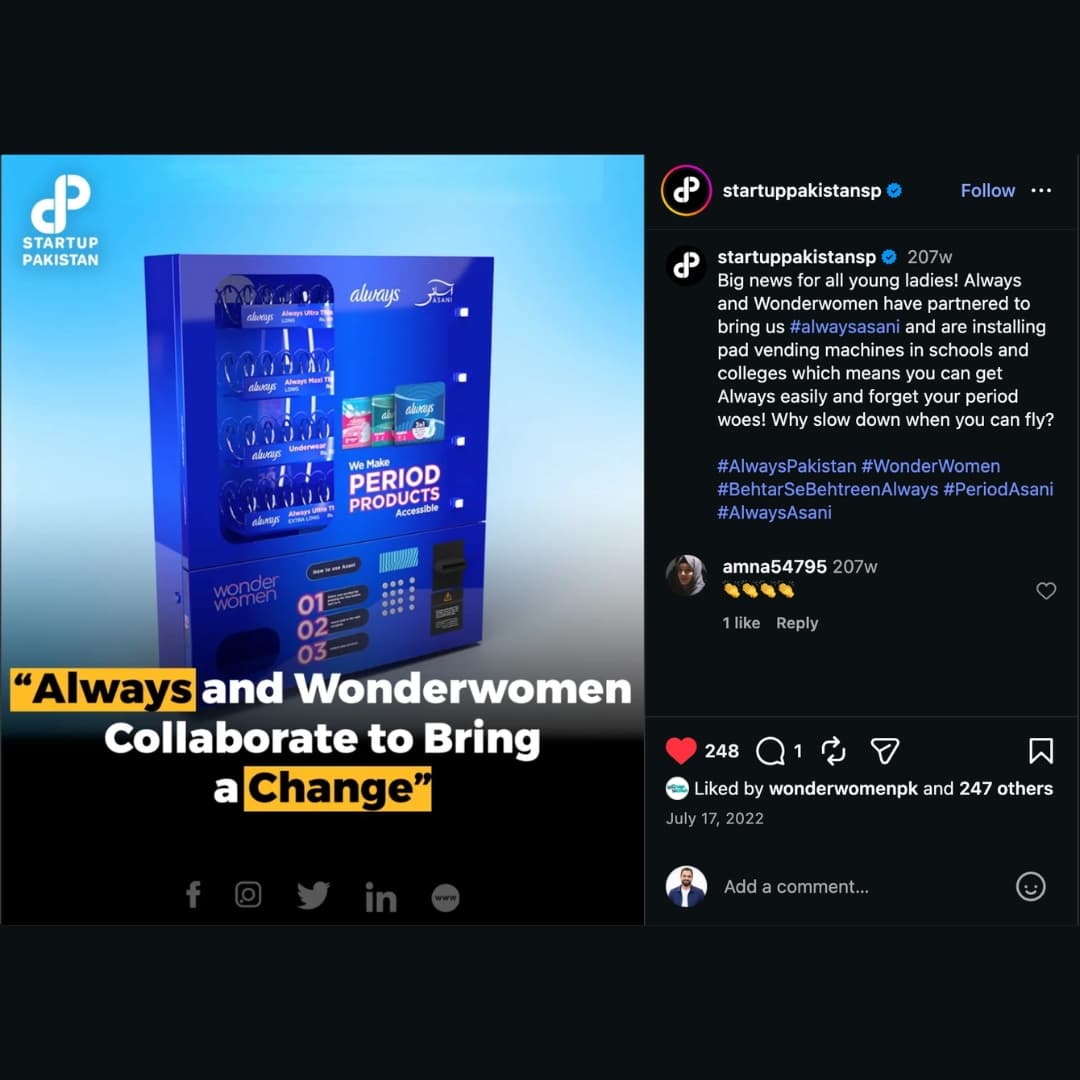
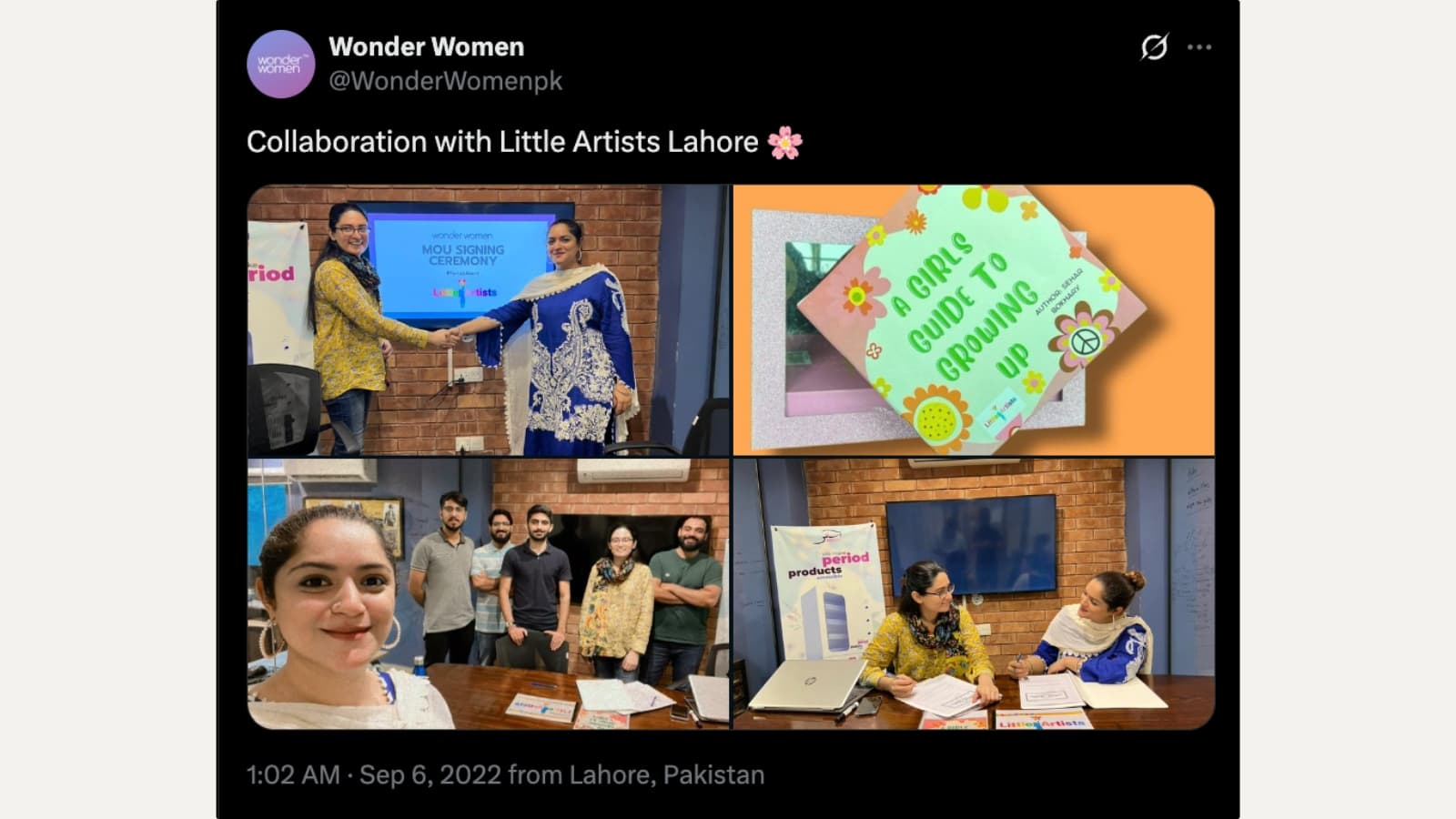
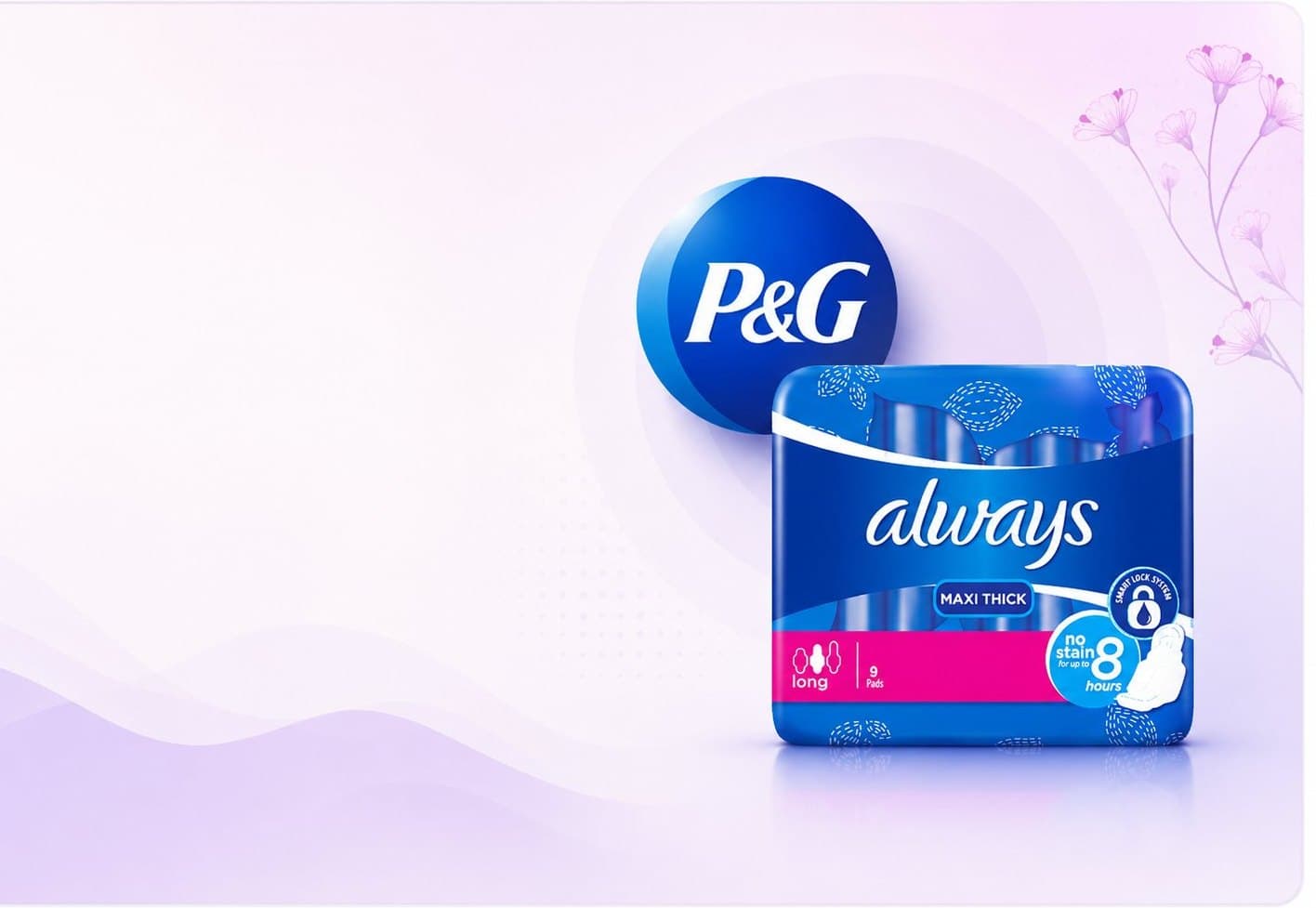
Closed a partnership with Procter & Gamble (Always) to power Asani machines across Pakistan.
molped
Designed for Hayat Kimya
Engineered a custom machine for the Molped brand by Hayat Kimya.
The deal did not close.
What I Built
End-to-End Execution Across Hardware, Software & Operations
Hardware Product
Asani Vending Machine
4 rows, 56 pads. Cash, employee PIN or app — at ~1/10th the cost of imports.
Mobile Application
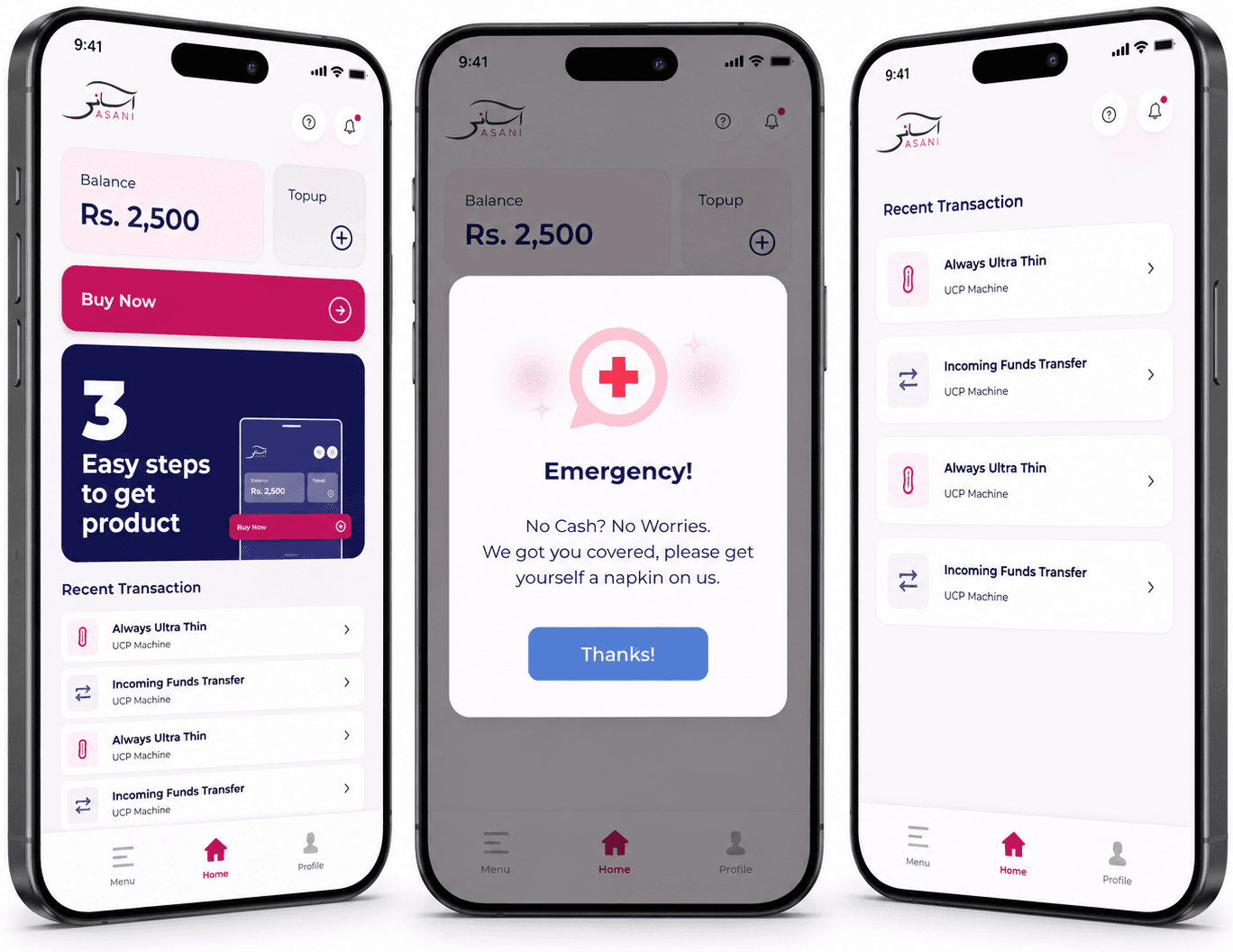
Asani App
Bluetooth payments, and an Emergency Pad that gifts PKR 50 once a month.
Partner Portal
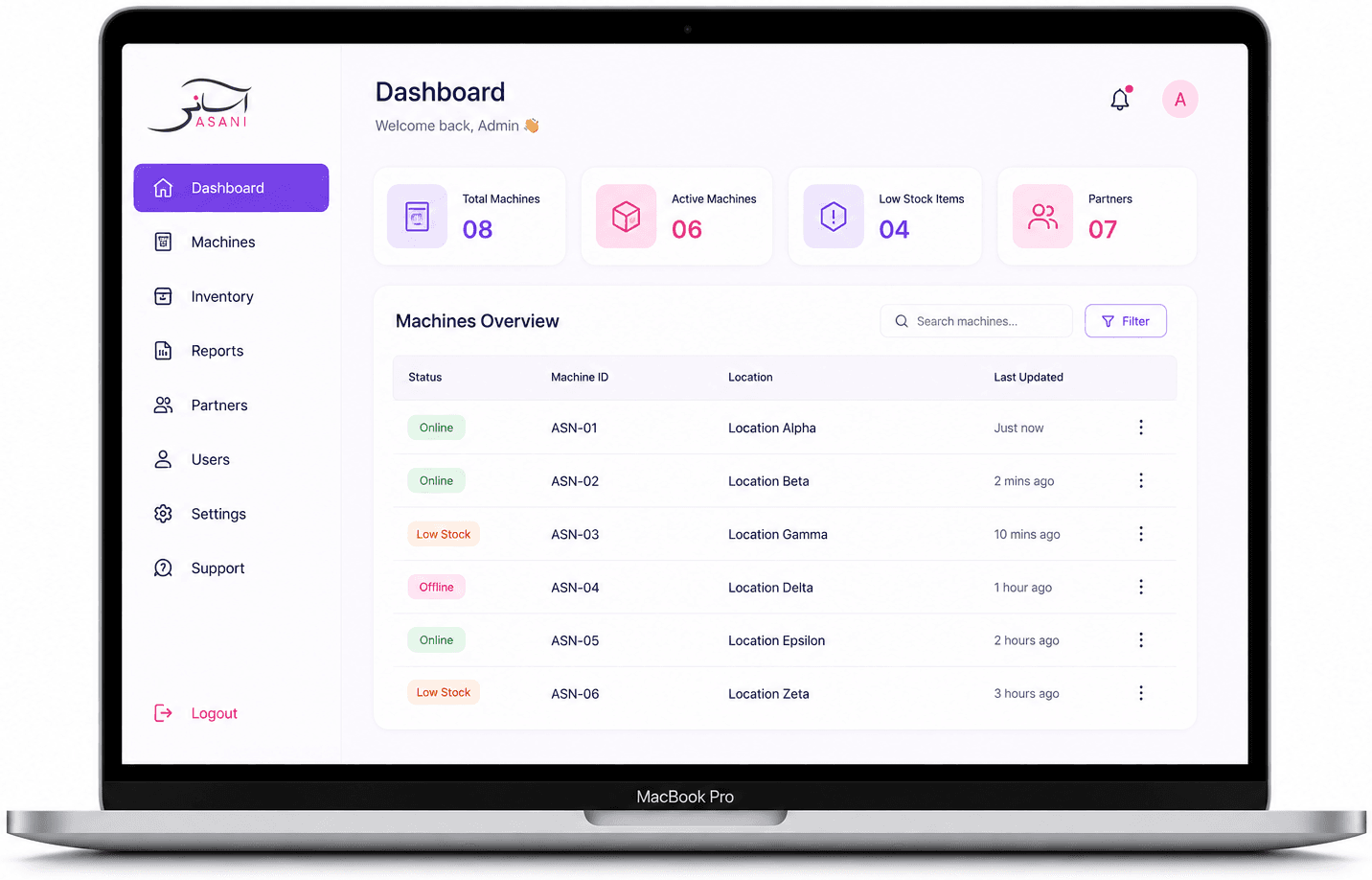
Dashboard
Multi-tenant — each institution saw only its own estate, refills and reporting.
Operations System
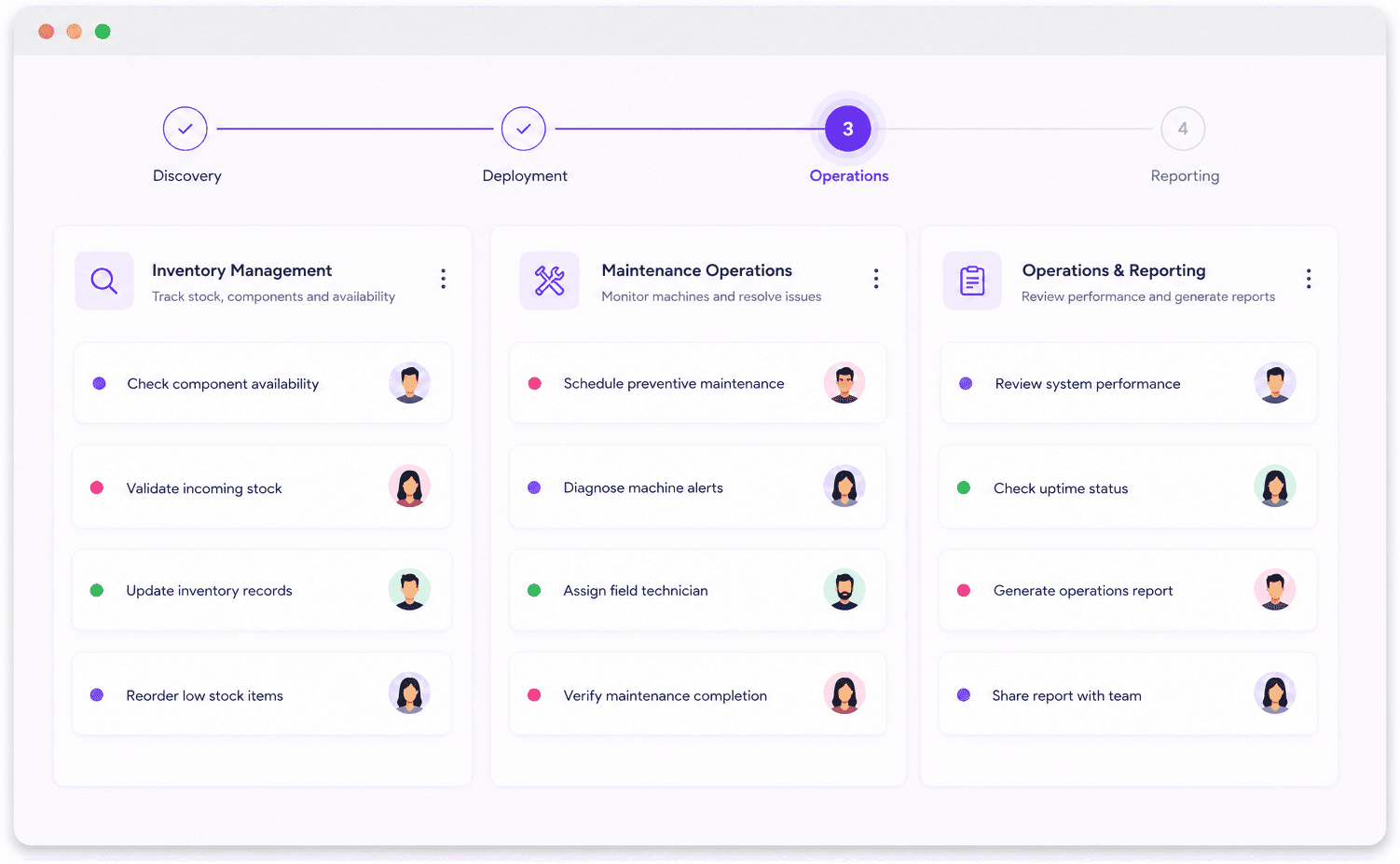
Inventory Engine
Warehouse to machine: stock, refills, preventive maintenance, SLA reporting.
Campus Ambassador
Program
Student reps ran the field ops, with codes tied to locations rather than units.
PCOS Platform
Asani Health
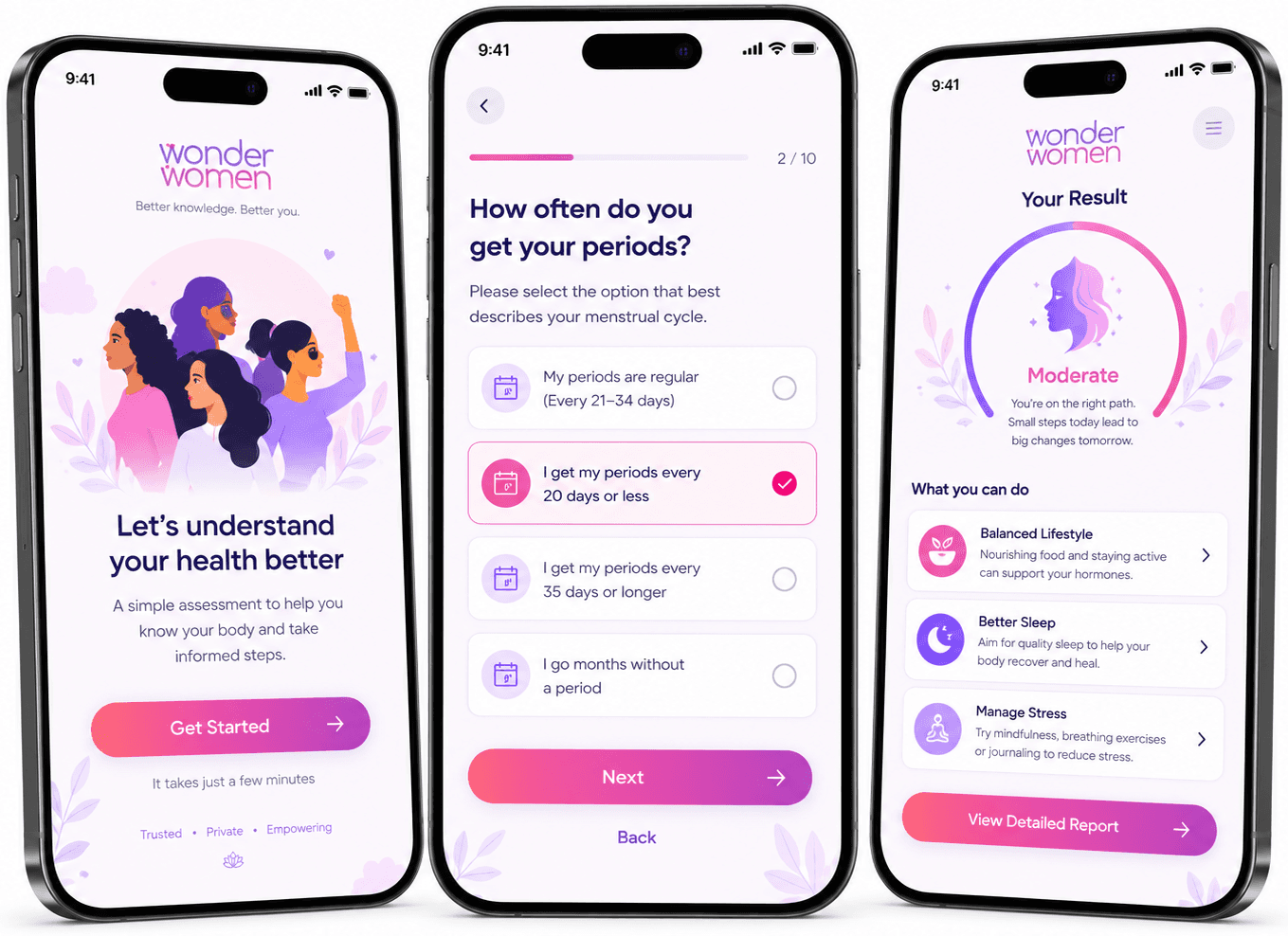
A personalised risk indication in under three minutes, plus a clinical community.
Diplomatic Recognition
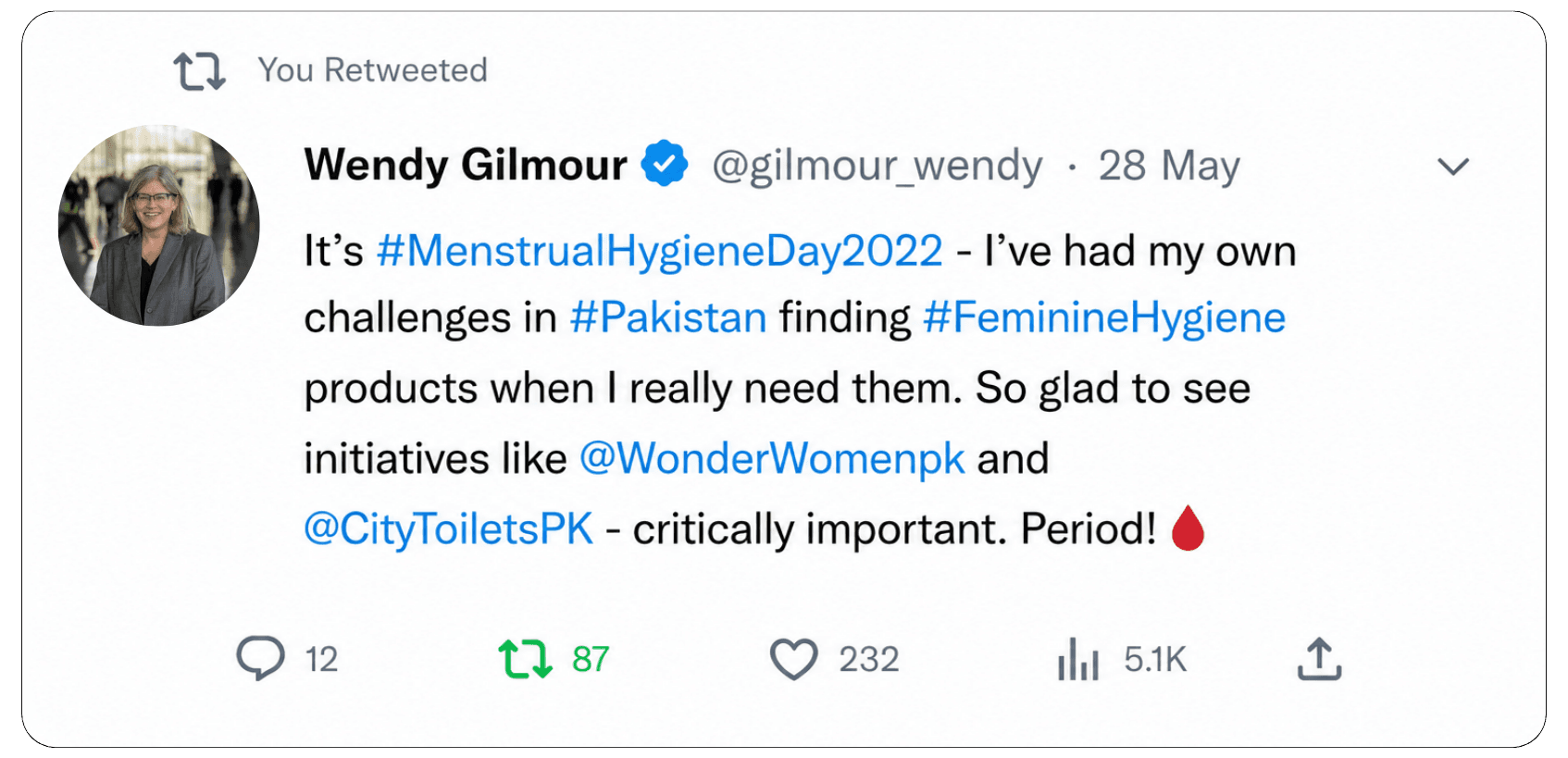
I’ve had my own challenges in Pakistan finding feminine-hygiene products when I really need them. So glad to see initiatives like @WonderWomenpk — critically important. Period!
Wendy Gilmour
Canadian High Commissioner to Pakistan (2018–2022)
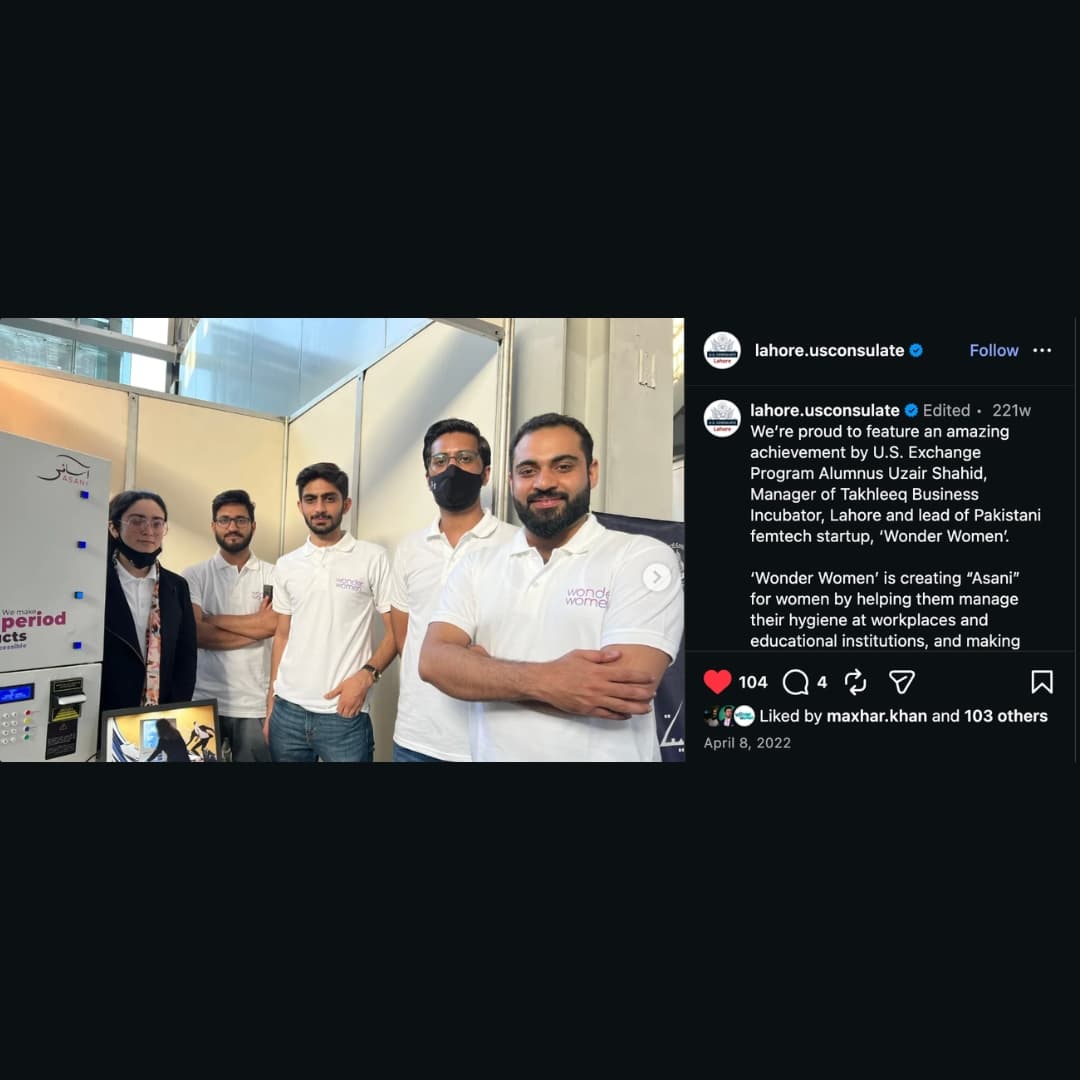
Posted on Menstrual Hygiene Day, 28 May 2022, while she was serving as High Commissioner — weeks after the US Consulate General Lahore shared its own feature of the startup.
Government of Canada
A global leader amplifying a local mission for dignity, access, and change.
Empowering Women’s Health Through Technology
Our Solution
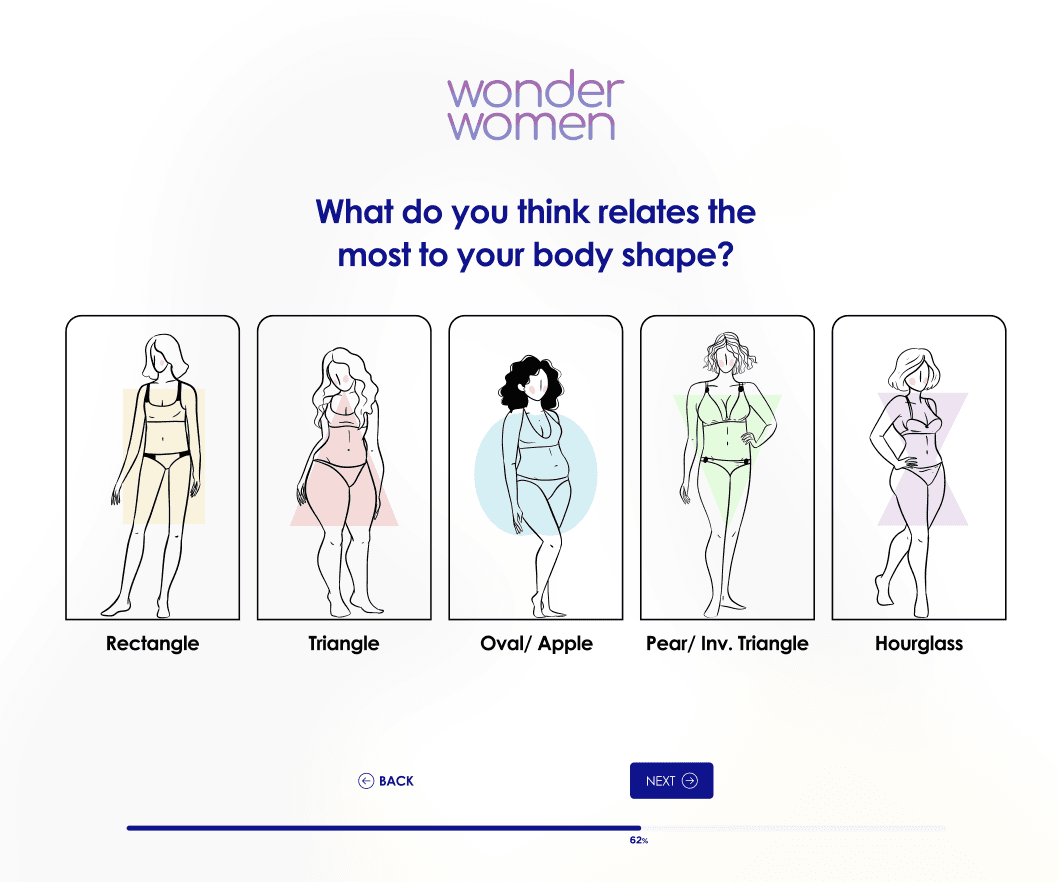
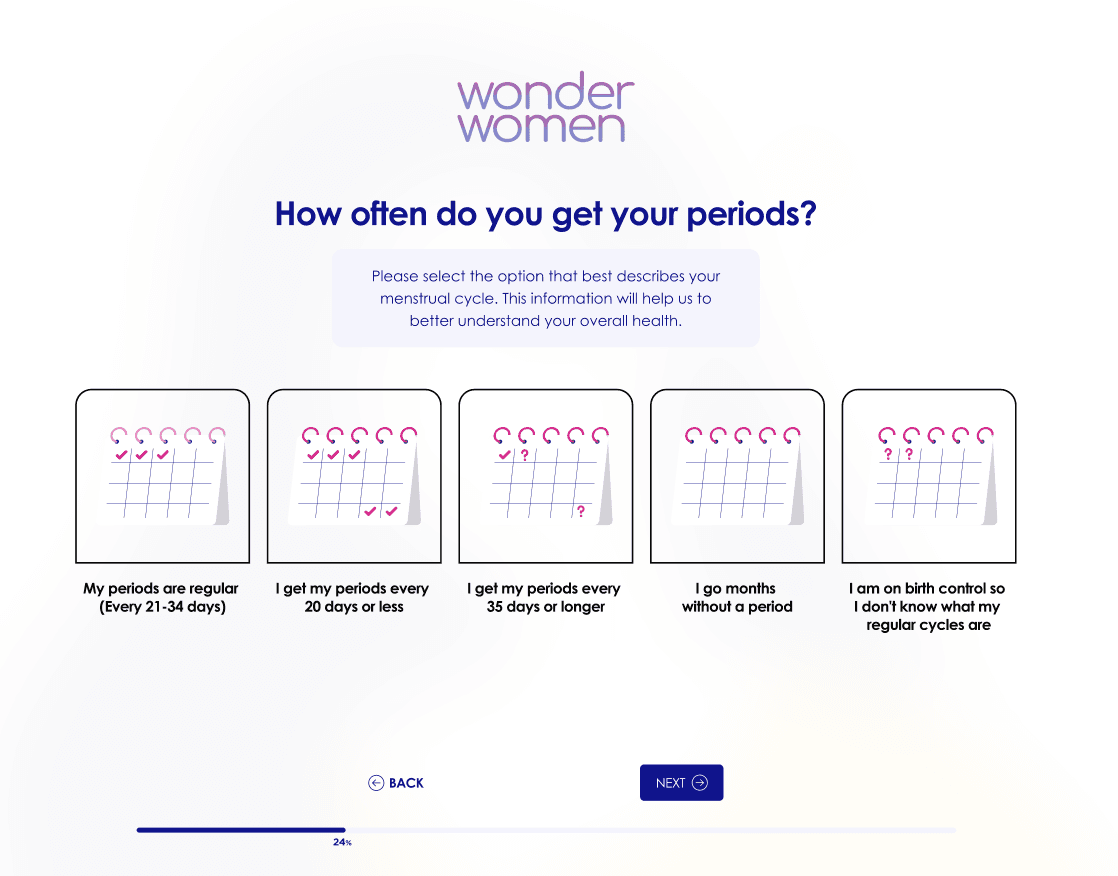
PCOS Self–Assessment Tool
A science-backed, interactive tool that helps women evaluate their risk of PCOS based on clinical factors and lifestyle insights.
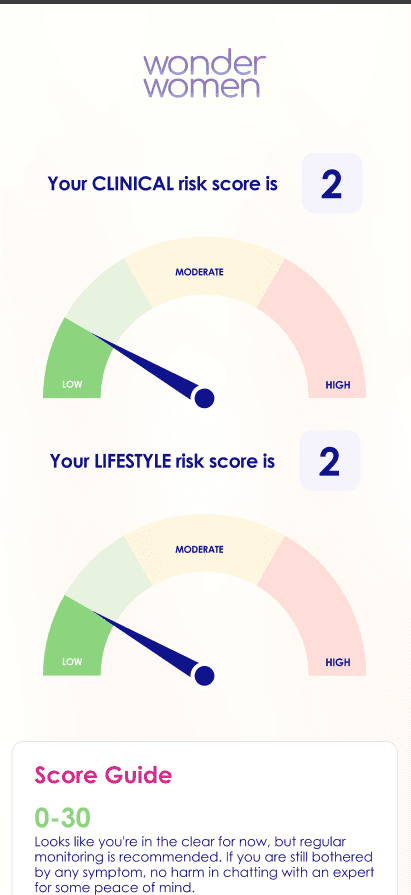
Personalized Risk Score
Get your clinical and lifestyle risk scores instantly with easy-to-understand results.
Smart & Guided Assessment
Answer simple, research-backed questions across multiple categories.
Actionable Insights
Understand your risk better and take the first step towards a healthier you.
Your body. Your health. Your first step towards better tomorrow.
Evidence Based Assessment
Built on clinical research & global guidelines
Early Awareness Matters
Identify potential risks early for better outcomes
Private & Secure
Your data is 100% confidential and protected
Take Charge of Your Health
Small step today for a healthier tomorrow
Our Innovation
Smart Machines. Real Impact. Accessible Care.
We designed and deployed Asani vending machines to make period products accessible, hygienic, and available 24/7 for every woman.
Locally Designed
Proudly designed and engineered in Pakistan.
Widely Deployed
Installed in universities, workplaces, hospitals & public spaces.
Reliable & User Friendly
Secure, easy to use, and built for 24/7 accessibility.
Dignity. Access. Empowerment.
Ensuring every woman has what she needs, when she needs it most.
Three Machines. One Mission.
Different Designs. Same Purpose.
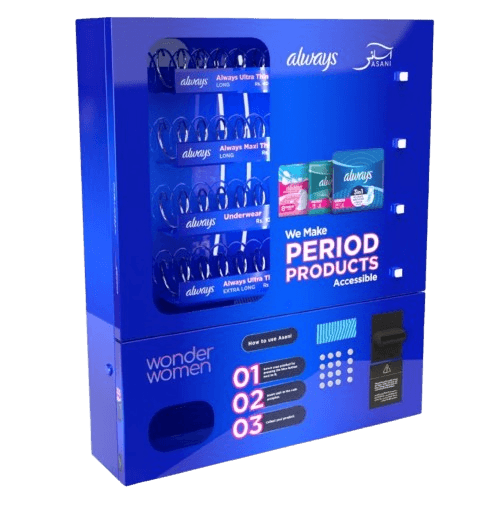
Always Asani
Partnered machine featuring Always products for trusted protection & comfort.
Trusted
Partnership
Secure &
Reliable
24/7
Availability
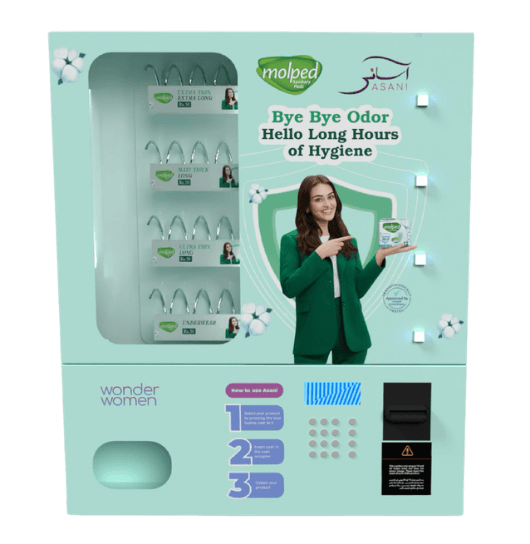
Molped Asani
Built for long-lasting freshness and hygiene with Molped premium products.
Odor Control
Technology
Long Hours
of Hygiene
Dermatologically
Tested
Classic Asani
Our signature machine designed for simplicity, accessibility & everyday reliability.
Simple &
Reliable
Low Maintenance
Design
Made for Everyone,
Everywhere
Different partners. Different needs. One goal – making period products accessible for every woman.
29
Machines Deployed
24
Locations
75,000+
Transactions
1/10th
Cost of Imports
The Journey
From a campus emergency to a national footprint
Five years, two products, one national brand partnership — and the chapter where Ali took the company from a pilot to a business.
01
May 2019
01Pre-Ali
The problem shows up
A campus period emergency at the University of Central Punjab sparks the Asani concept. Wonder Women begins inside the Takhleeq Business Incubator, and is formally registered as Wonder Women Private Limited in 2022.
03Founder Chapter Begins
May 2022
03
Ali joins as Co-Founder & Head of Product
Ali takes ownership of the product end-to-end: the hardware, the software, enterprise sales, and fundraising.
05
July 2022
05
A national brand signs on
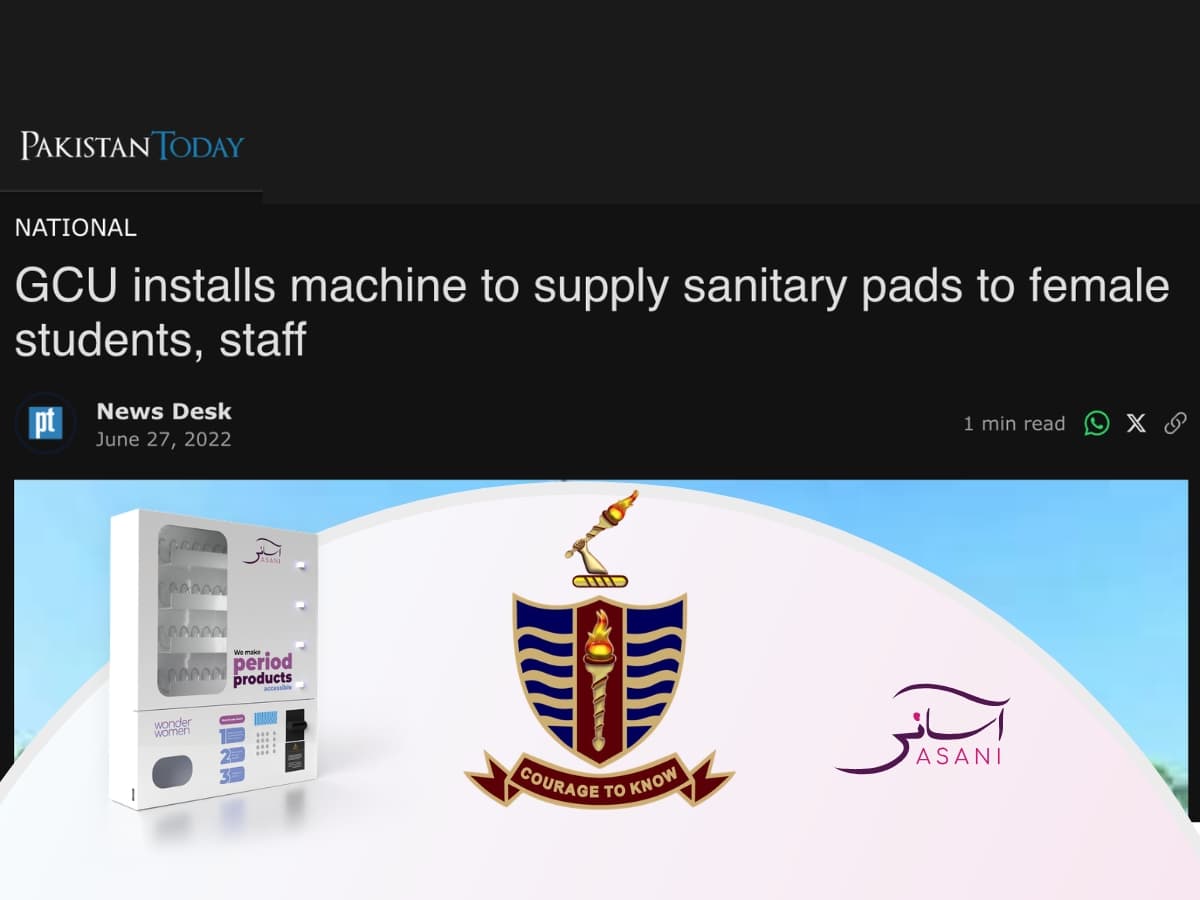
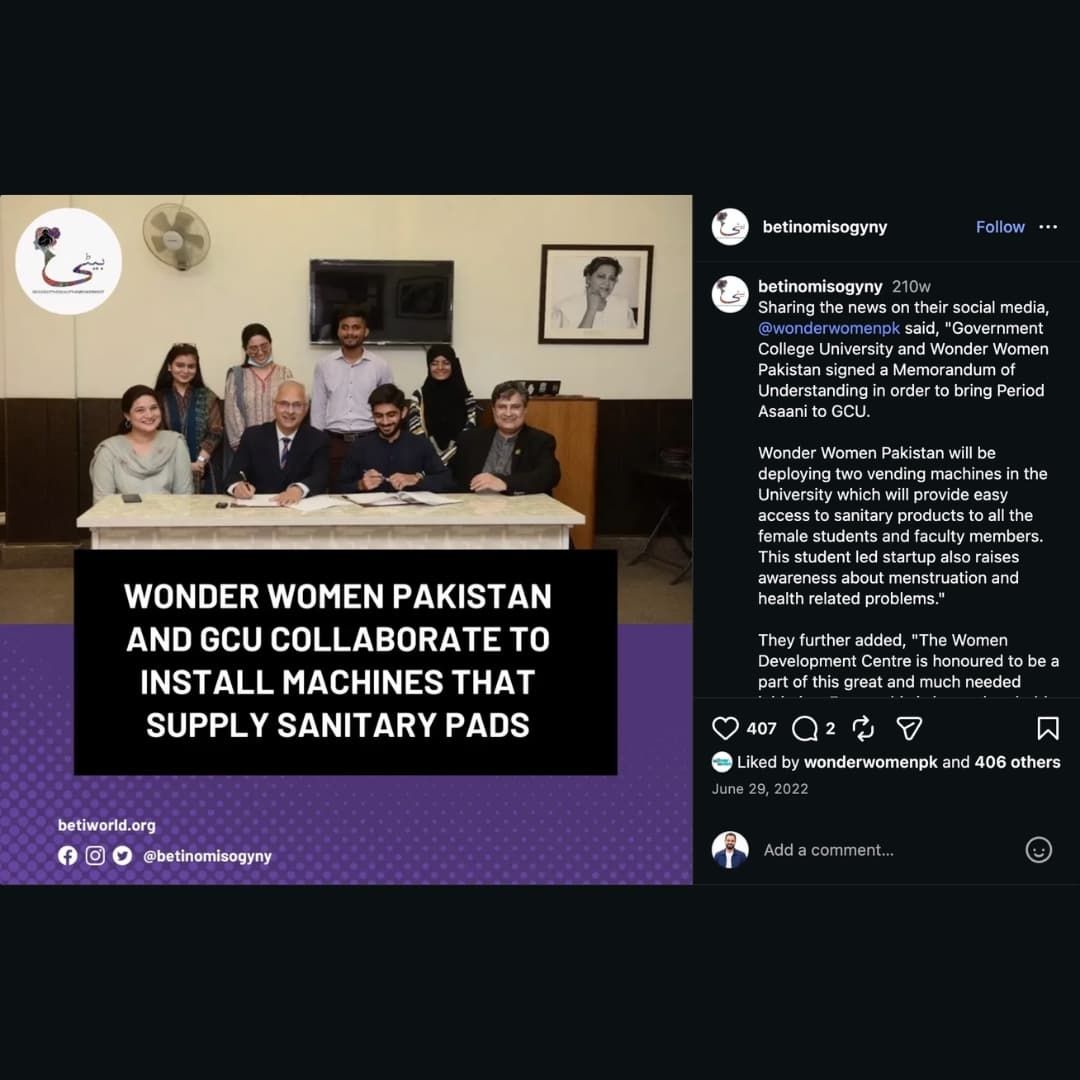
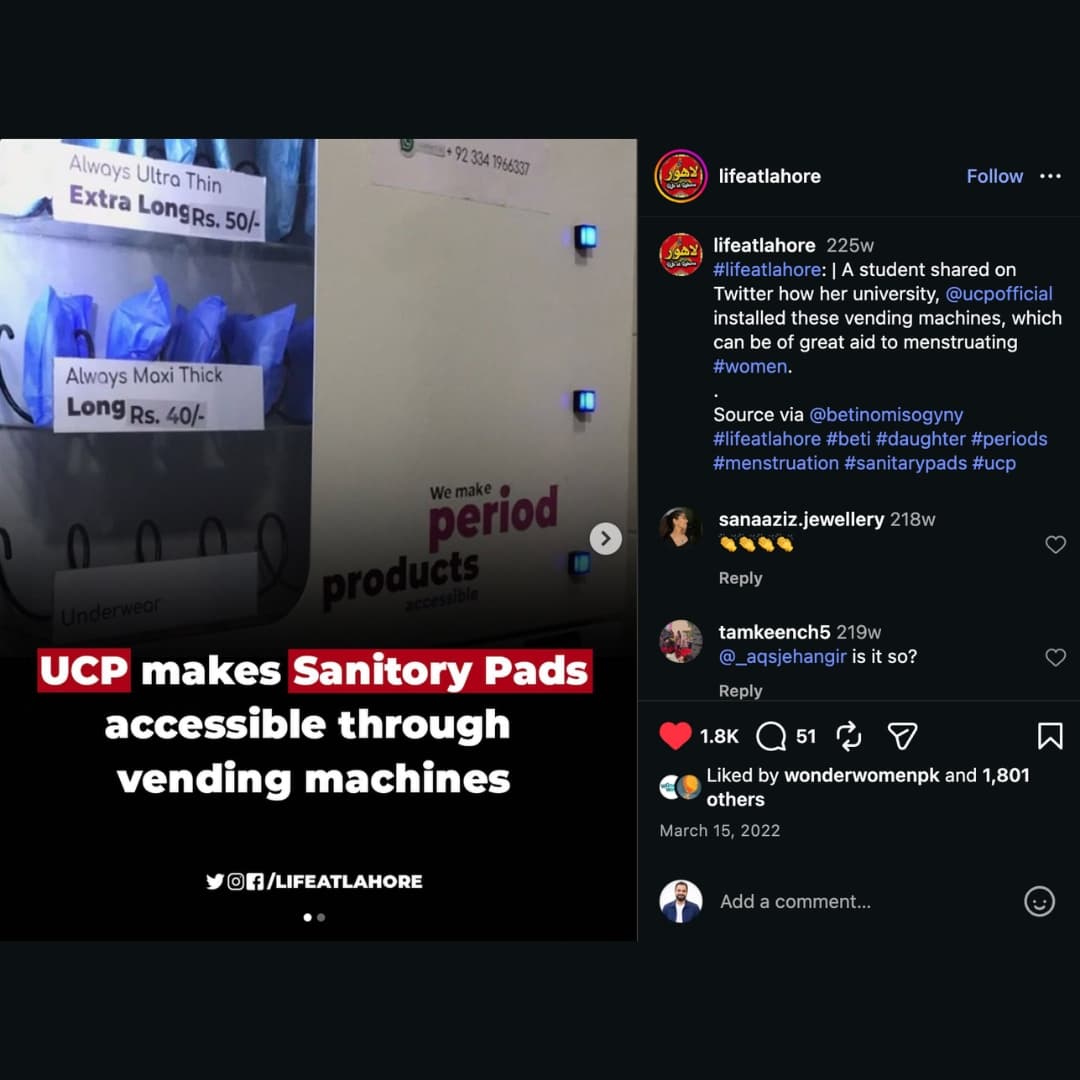
The partnership with Always, Procter & Gamble’s menstrual-care brand, launches as #AlwaysAsani across four Lahore campuses — LUMS, GCU, the University of Lahore and UCP.
07
Late 2023
07
Two products, then a pivot
Asani Mini ships as the smaller second tier. The company then moves beyond hardware into digital health, building Pakistan’s first PCOS self-assessment tool.
02
February 2021
02Pre-Ali
First pilot
Wonder Women pilots Asani at Forman Christian College — 30 users in the first two weeks, with COVID holding campus attendance near 40%.
04
March 2022
04
Pakistan notices
The public pilot opens at UCP Lahore and ProPakistani runs the first national story. A student’s unprompted post reaches 4,300 likes and 525 reposts.
06
November 2022
06
Backed by the HEC
Wonder Women wins the HEC Innovator Seed Fund — USD 35,000, one of 15 selected from 186 applicants.
08
October 2024
08
The chapter closes
Ali’s tenure concludes after two and a half years: 29 machines, 24 locations, 75,000+ transactions, and PKR 3.7 million in first-year revenue.
Founder chapter begins — May 2022
Tenure
May 2022 – October 2024
Impact
29 Machines | 24 Locations
Transactions
75,000+
Revenue (First 12 Months)
PKR 3.7 Million
Recognized. Trusted. Celebrated.
Milestones that fuel our mission
From local pitches to global stages — our journey has been recognized by some of the most prestigious platforms.
01
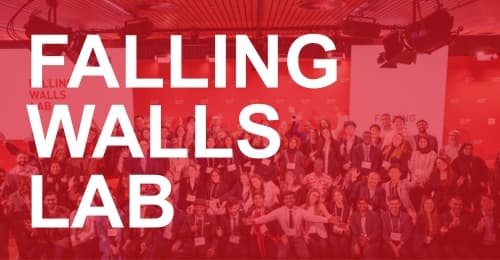
Falling Walls Lab
Pakistan Winner · 1st Place
2021
02
Pakistan StartUp Cup
TiE Islamabad · Regional Finalist
2021
03
Bahria Innovation Challenge
1st Place
2022
04
Entrepreneurship World Cup
1st Pakistan · Top 100 Global
2021
Our Impact. Their Trust.
Deployed & Partnered With Institutions That Inspire
Asani machines ran in universities, medical colleges, hospitals and corporate floors across Pakistan — alongside the schools and colleges we worked with on menstrual-health awareness and outreach.
University
University
University
University
University
University
University
Art & Design
School
School
Medical University
Medical College
Medical College
Medical College
Medical College
Trusted by leading institutionsto promote health, dignity & equality
Partnering for ahealthier tomorrow.
Across Pakistan.Making an impact.
Awareness. Education. Empowerment.
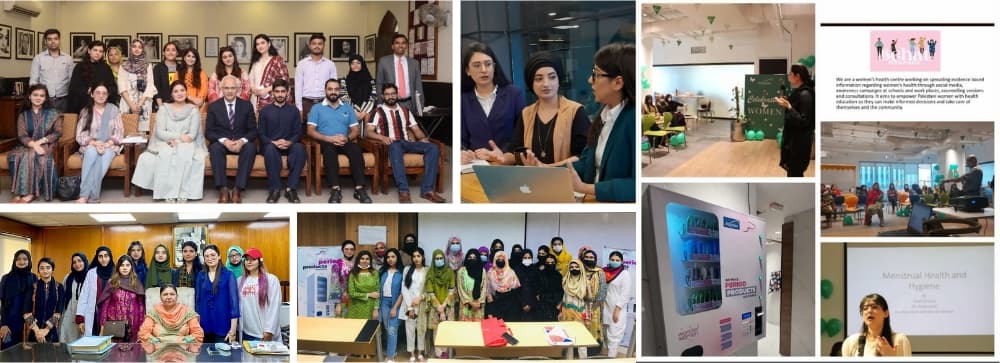
Events & Awareness Sessions
From panel discussions to campus drives, we’ve hosted and participated in multiple events to break the stigma, spread awareness, and promote menstrual health education across communities.
50+
Events Organized
100+
Sessions Conducted
21+
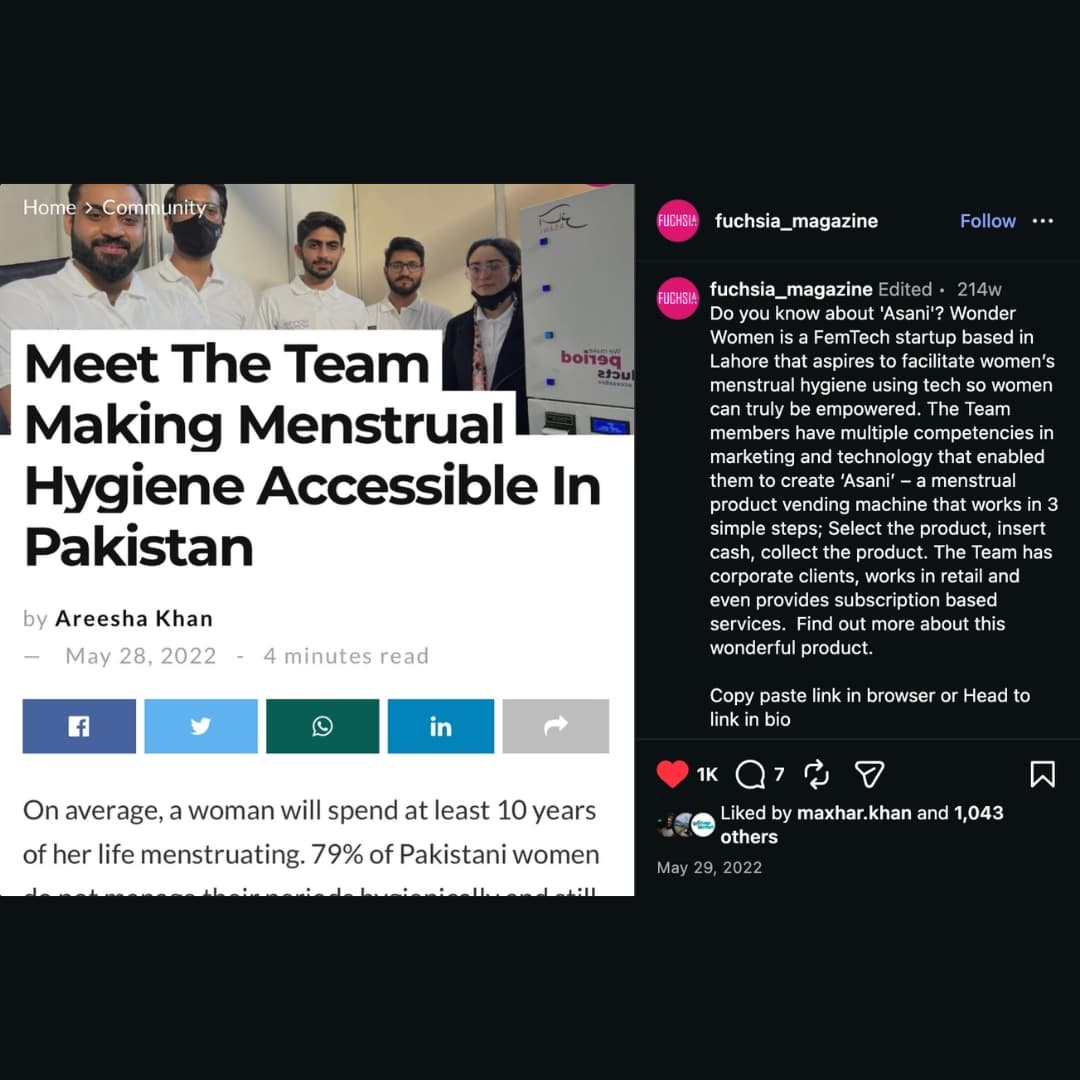
Media Features
We believe awareness is the first step to change.Together, we create conversations that lead to action and lasting impact.
Trusted by Leading Organizations
The companies that put Asani on their floors
Multinationals, listed corporates and Pakistan’s leading teaching hospital — every one of them a closed deal, not a pitch.
Alongside Arbisoft, Superior University and The Learning Hub, Gujranwala — plus universities and medical colleges across Lahore, Karachi, Sheikhupura and Gujranwala.
Frequently Asked. Honestly Answered.
Questions about Wonder Women
Everything you might want to know — the role, the deals, the numbers, and how it all connects.
01
What was Ali Ahmed’s role at Wonder Women?
Co-Founder & Head of Product, May 2022 to October 2024. He owned the product end-to-end — the Asani hardware, the mobile app and partner portal, enterprise sales, and grant fundraising.
02
Who co-founded Wonder Women?
Public credit belongs to two people: Ayesha Haroon, whose 2019 campus period-emergency sparked the Asani concept, and Ali Ahmed, who joined as Co-Founder & Head of Product in May 2022. The company grew out of the Takhleeq Business Incubator at the University of Central Punjab, Lahore.
03
What did Ali Ahmed actually build at Wonder Women?
An ecosystem, not a single product: the Asani and Asani Mini vending machines, the mobile app with its Emergency Pad feature, the multi-tenant partner portal and its warehouse-to-machine inventory chain, the campus-ambassador program, an enterprise sales campaign spanning 49+ companies, the grant and investor materials, and Pakistan’s first PCOS self-assessment tool with its 700-member community.
04
How much revenue did Wonder Women generate?
PKR 3.7 million in its first twelve months from a standing start — across four models: machine rentals, outright sales, corporate facilitation, and campaign partnerships like #AlwaysAsani.
05
Which UN Sustainable Development Goals did Ali Ahmed’s work at Wonder Women advance?
Four. SDG 3 — Good Health and Well-Being, through Asani’s menstrual-health access and the PCOS self-assessment and care platform. SDG 4 — Quality Education, by keeping girls in school in a country where one in three drops out on reaching puberty. SDG 5 — Gender Equality, the core mission: menstrual equity, dignity, and dismantled stigma. And SDG 6 — Clean Water and Sanitation, whose target 6.2 explicitly covers menstrual hygiene management.
06
What recognition did Wonder Women win?
The HEC Innovator Seed Fund (USD 35,000 — 1 of 15 from 186 applicants, 2022), 1st place at the Entrepreneurship World Cup Pakistan and a Top 100 Global Startups placing (2021), the Falling Walls Lab Pakistan win (2021), 1st place at the Bahria Innovation Challenge (2022), a SheLovesTech regional win, and a Pakistan StartUp Cup 2021 (TiE Islamabad) regional-finalist placing — plus 21+ national media features and supportive public posts from the US Consulate General Lahore and Canada’s then-High Commissioner to Pakistan.
07
How did Wonder Women partner with Procter & Gamble?
Ali closed a partnership with Always, the Procter & Gamble menstrual-care brand, which launched as the #AlwaysAsani campaign in July 2022. Co-branded Asani machines ran across four Lahore campuses — LUMS, Government College University, the University of Lahore, and the University of Central Punjab — under Always Pakistan’s own line: “Access to hassle-free menstrual hygiene products is the right of every woman.” Commercial terms remain confidential.
08
What is Asani?
Asani is Pakistan’s first locally assembled wall-mounted sanitary-napkin vending machine, built by Wonder Women to put period products within reach inside female restrooms. The original unit holds 56 pads across four dispensing rows and accepts cash (Rs 20, 50 or 100), a 4-digit employee PIN, or app payment over Bluetooth. Asani Mini, launched in late 2023, is the smaller second tier — three rows, digital payments only.
09
How did Wonder Women build a vending machine in Pakistan at a tenth of the cost of imports?
By localising the bill of materials. Roughly 65% of components were produced in Pakistan — sheet metal and acrylic fabricated by Lahore vendors, plus local electronics — with about 35% imported (cash acceptors, motors, PCBs) on a two-month lead time against a five-machine buffer. Assembly ran at the Takhleeq Business Incubator: one skilled week per machine, two resources on the line, capacity for ten a week. A partner who said yes was installed within roughly two weeks.
10
How did Wonder Women sell Asani to universities and corporates?
By hand, at volume. The corporate book covered 49+ companies pursued through 72+ personalised proposals and follow-ups to 70+ named contacts. To shorten closes, Ali waived operational charges on the ownership model, introduced a 30-day free trial, and cut delivery from 30 days to 3. Revenue came from four models: machine rentals, outright sales, corporate facilitation, and campaign partnerships.
11
Where were Asani machines deployed in Pakistan?
Twenty-nine machines across 24 locations in Lahore, Karachi, Sheikhupura and Gujranwala — eight rental deployments, ten machines owned outright by four buyers, and eleven university placements. Aga Khan University Hospital was the largest single deployment at six machines. Campuses included LUMS, FAST-NUCES, Forman Christian College, GCU, the University of Lahore, BNU and the National College of Arts; corporate floors included Engro, Sapphire, NETSOL and Devsinc.
12
Why did Wonder Women expand from hardware into digital health?
Because the hardware exposed a larger problem. PCOS affects an estimated 52% of Pakistani women against 10–20% globally, roughly 70% of cases go undiagnosed, and 38% of infertility cases are attributed to it. In late 2023 Ali led the pivot to a digital-health platform: Pakistan’s first PCOS self-assessment tool, returning a personalised risk score in under three minutes, backed by a moderated clinical community that reached 700 members in two months and three structured care programs — Periods Asani, Weight Loss Asani and Lifestyle Asani.
13
What software did Wonder Women run behind the machines?
Two systems Ali owned end-to-end. The ASANI mobile app handled Bluetooth Low Energy payments and carried an Emergency Pad feature that gifted PKR 50 of credit once a month, so nobody was stranded by an empty wallet. Behind it sat a multi-tenant partner portal running the warehouse-to-machine inventory chain, refill and maintenance operations, and per-institution usage reporting — plus a campus-ambassador program with separate dispensing and maintenance codes tied to locations rather than individual machines.
14
What is Ali Ahmed known for as a founder?
Building and commercialising hardware in a market that mostly imports it. At Wonder Women he co-founded and ran product for Pakistan’s first locally assembled sanitary-napkin vending machine, took it from pre-revenue to PKR 3.7 million in twelve months, closed a national partnership with Procter & Gamble’s Always brand, won the HEC Innovator Seed Fund against 186 applicants, and pivoted the company into digital health. He works today as an AI Solutions Engineer, applying the same end-to-end execution to AI products.
Still curious?
If it isn’t answered here, ask me — the fastest way to a real answer is a real conversation.