Five platforms. One obsession: get the number right.
A production suite for Pakistani industry — measuring what a building pulls from the grid, what its solar generates, what each tenant owes, and which source carried the load. All live today, built for BijliBachao.pk.
 Ali AhmedHead of Energy Systems & Product Engineering · BijliBachao.pkOctober 2025 – present
- platforms built and running
- 5
- energy measured by WattEY
- 1.92 GWh
- PV strings graded by SPC
- 874
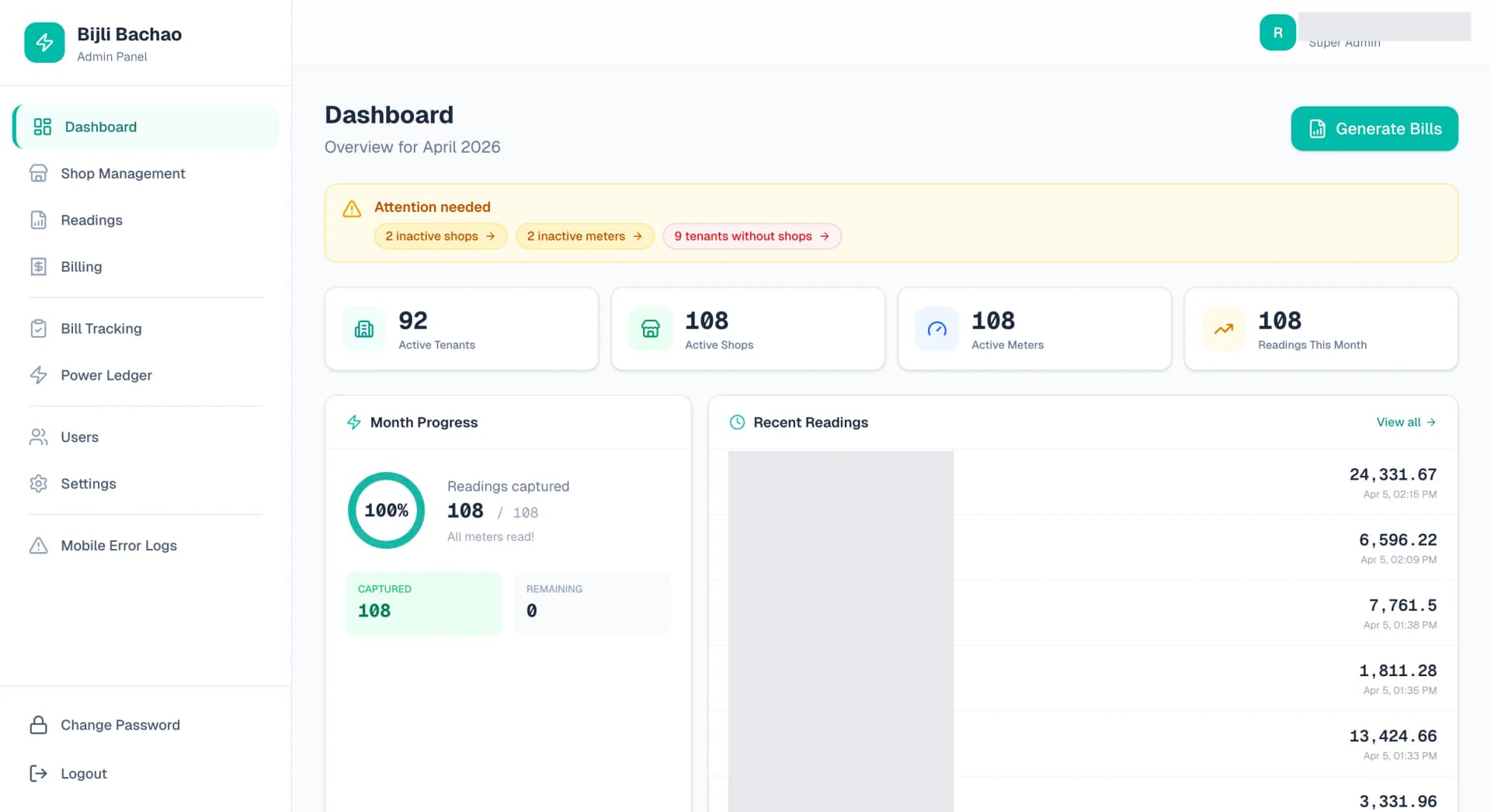
- TenantBill readings, all photographed
- 668
platforms built and running
energy measured by WattEY
PV strings graded by SPC
TenantBill readings, all photographed
One company. One discipline. Five live platforms.
WattEY is the umbrella — everything electricity, from monitoring to billing — with switching and sub-billing inside it. Solar Performance Cloud stands alongside it as the independent solar-inspection layer. Each links to its full chapter, and to the live product.
WattEY
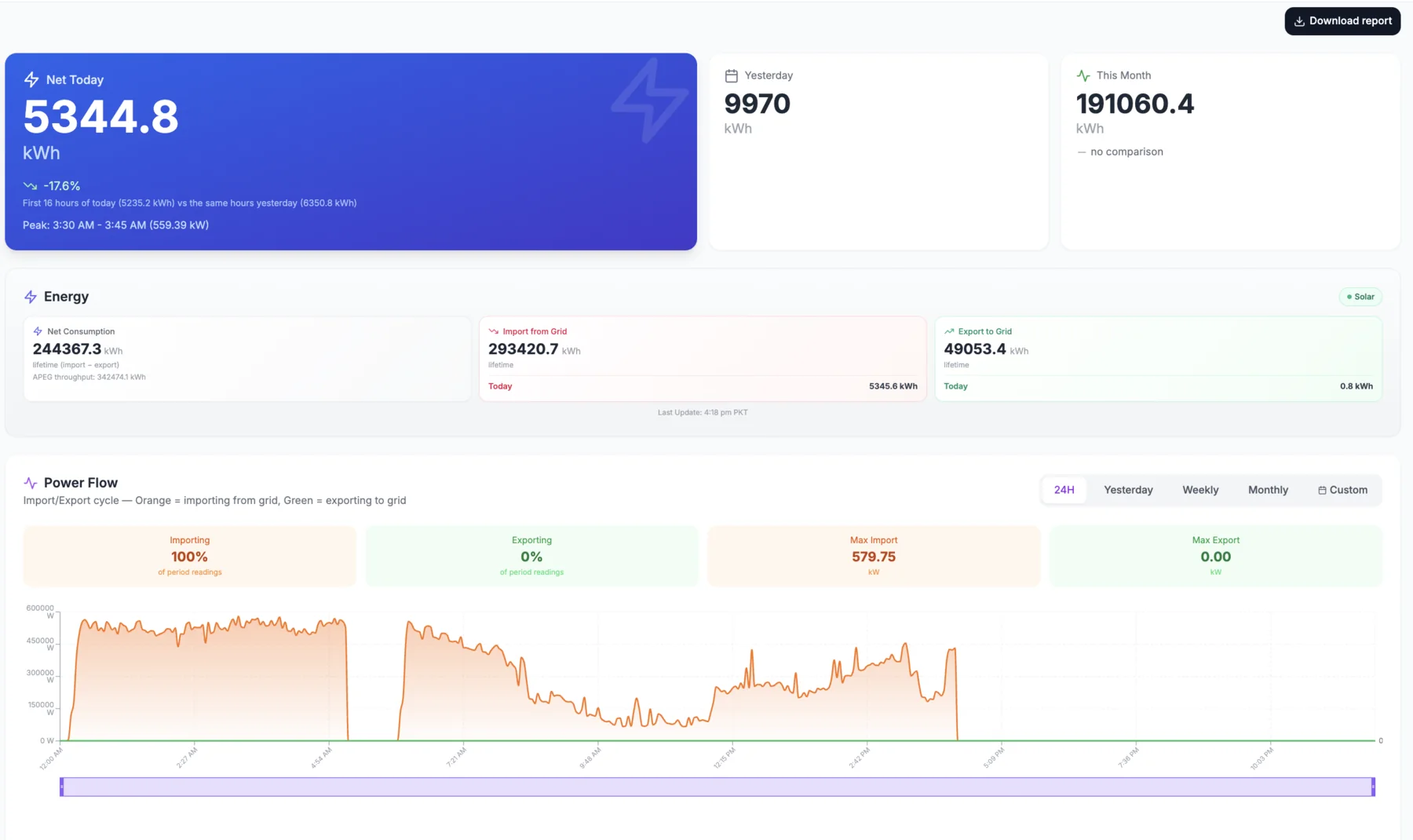
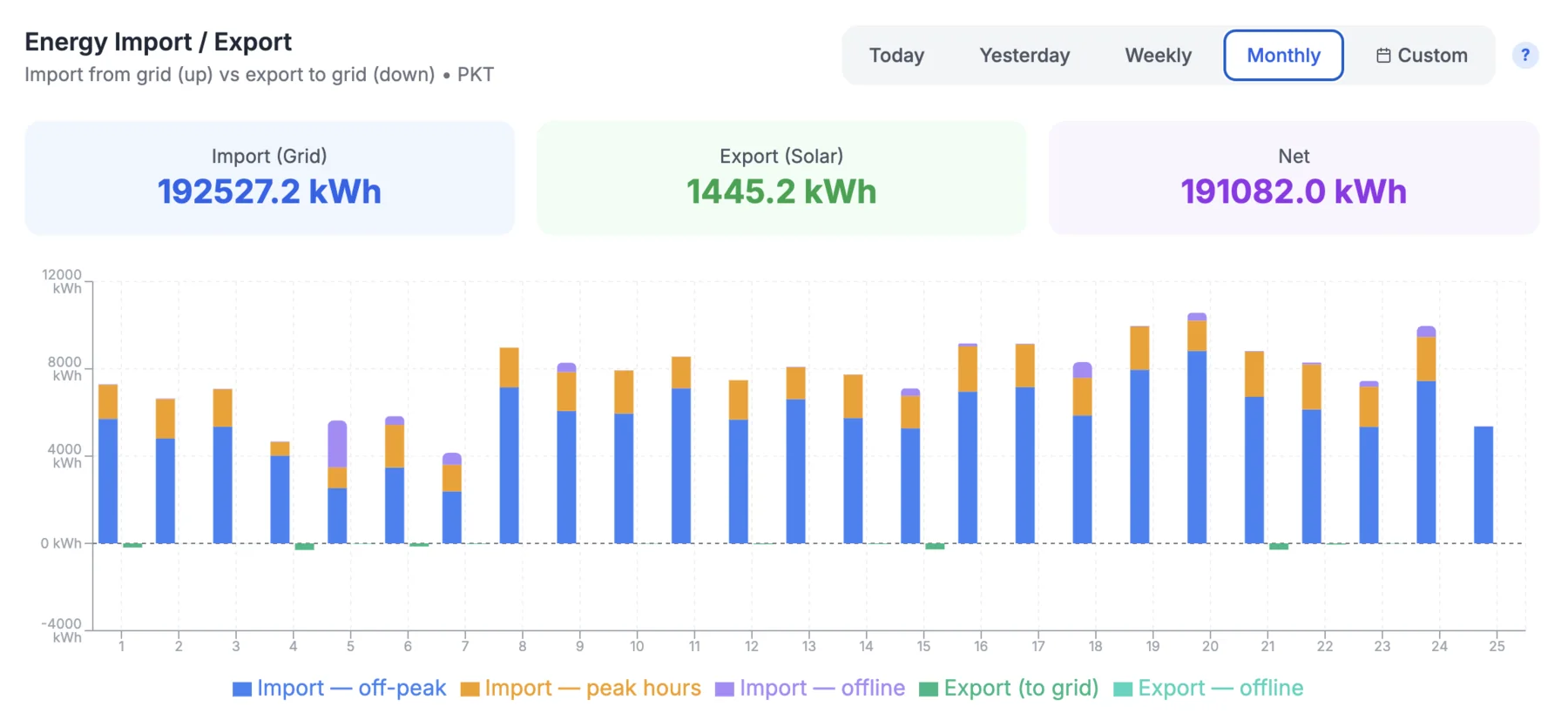
The electricity platform — monitor, control and bill energy across grid, solar and generator, read every three minutes and turned into what a site is actually billed on.
1.92 GWh
monitored since November 2025
Inside WattEY
STS — Smart Transfer Switch
Safety-critical changeover between grid, solar and generator — so you know which source carried the load.
Live · industrial
TenantBill
Photo-verified sub-metering and billing for commercial property — every reading carries a timestamped meter photo.
668 readings
Wattey Sub-Billing
Fair per-resident billing for shared living — by what each person used and the hours they were present.
265-bed property
Solar Performance Cloud
Independent, string-level solar inspection — it grades every PV string against its neighbours on the same inverter and names the fault, rather than just raising an alarm. Not part of WattEY: a product in its own right.
874 strings
across 92 sites · ≈4.25 MW recorded

Reads seven inverter clouds · six manufacturers · one health layer








The number the factory actually needed
One client manufactures clothing for global brands. They didn’t ask how their solar was performing — they asked how much carbon they had avoided, because their buyer wanted the figure.
Jan 2026
CBAM went live
The EU’s carbon border mechanism became a financial obligation — exporters without verified installation-level data are priced against the highest-emitting defaults.
Scope 1 + 2
Now a condition of trade
Major apparel buyers require mill-level emissions data to qualify a supplier at all. It stopped being a courtesy and became qualification.
≈60%
of Pakistan’s exports are textiles
Over a third go to Europe. For an exporter that cannot produce the number, this is not a reporting problem — it is a margin problem.
And a renewable claim is only as good as the meter behind it. Measuring generation string by string, capturing consumption per tariff period, recording generator runtime, and photographing every reading with a timestamp are not four unrelated features — they are the evidence a factory needs to prove what it consumed, what it generated, and what it burned.
Five platforms, one discipline: get the number right.
They share the same standard, applied to Pakistani energy software from day one.
IEC 61724-1 · 62446-1
International standards
IEC 61724-1 health scoring and IEC 62446-1 string classification — what utility-scale operators use globally. Stated as aligned to, never certified.
4 roles
Multi-tenant by default
Organisation-scoped data isolation and role-based access, the way enterprise buyers expect SaaS to be built.
hourly audits
An observability baseline
Error tracking, hourly system-health audits, health endpoints, and enterprise-readiness audits across the suite.
runbooks · change logs
Operator handover, not lock-in
Runbooks, audit reports and change logs — the software is maintainable by any competent operator, not dependent on the person who built it.
Real Pakistani businesses, in production.
These are the platforms’ live clients — mills, hotels, dairy, cold storage and commercial property. Ali is the builder and Head of Energy Systems & Product Engineering; operations stay with the BijliBachao team.
- Lahore Continental HotelHospitality
- Al Haram Paper MillPaper
- FANZ MillsMilling
- Amna Dyeing & FinishingTextile
- Qadir EngineeringIndustrial
- Zahoor Dairy FarmDairy / agri
- Gulberg, LahoreCommercial


BijliBachao.pk is a Pakistani solar and energy-automation company — an engineering design house that builds its own software rather than buying it. It was founded by Engr. Reyyan Niaz Khan, a UET Lahore engineer with 14+ years in Pakistan’s energy sector and a pioneer of digital energy auditing in the country.
Ali built the platform suite and the company website. Reyyan founded and directs the company — the distinction matters, and it is stated on every page.
What the Bijli Bachao platforms actually are
- Are the Bijli Bachao platforms actually live?
- Yes — they run in production today, in real factories, malls and solar plants. WattEY has measured around 1.92 GWh across 43 meters (19 organisations) since November 2025. Solar Performance Cloud grades 874 PV strings across 92 solar sites and has tracked 1.80 GWh. Metering closes a real monthly billing cycle at a Pakistani shopping mall — five consecutive months, 668 readings, every one photographed. STS handles changeover between supply sources.
- What engineering standards are they built to?
- Solar Performance Cloud is aligned to IEC 61724-1, which defines how photovoltaic performance is measured and reported, and to IEC 62446-1, which defines commissioning tests and inspection for grid-connected PV — its fault classifications use that standard’s test vocabulary. Both alignments are partial and stated as such: the platform has no irradiance sensors, meets no IEC monitoring class, computes no performance ratio and performs no commissioning tests. Across the suite, the shared discipline is multi-tenant architecture with organisation-scoped data isolation and role-based access.
- What is Ali Ahmed’s role at Bijli Bachao?
- Head of Energy Systems & Product Engineering, since October 2025. He designed and built the platform suite and the company website. BijliBachao.pk was founded by Engr. Reyyan Niaz Khan, and daily operations stay with the BijliBachao team — Ali is the builder and Head of Energy Systems & Product Engineering, not the account owner.
- How do the five platforms fit together?
- Four of them answer a factory director’s question from four sides. That question — where the electricity went and what it cost — is spread across four measurements nobody had joined up: WattEY measures what the site pulled from the grid, Solar Performance Cloud measures what its own solar generated, TenantBill allocates and bills consumption across tenants, and STS records which source was carrying the load. Together they are one account of a site’s energy. The fifth, Wattey Sub-Billing, is a separate product for a different building type — shared living, where the residents move in and out — dividing one bulk bill fairly per resident by what each used and the exact time they were there. Each is its own product; the thread is one discipline — measure it, and get the number right.
See the platforms running.
Every platform is in production. Visit the products, or read how each one was built.
Questions about Bijli Bachao
Are the Bijli Bachao platforms actually live?
Yes — they run in production today, in real factories, malls and solar plants. WattEY has measured around 1.92 GWh across 43 meters (19 organisations) since November 2025. Solar Performance Cloud grades 874 PV strings across 92 solar sites and has tracked 1.80 GWh. Metering closes a real monthly billing cycle at a Pakistani shopping mall — five consecutive months, 668 readings, every one photographed. STS handles changeover between supply sources.
What engineering standards are they built to?
Solar Performance Cloud is aligned to IEC 61724-1, which defines how photovoltaic performance is measured and reported, and to IEC 62446-1, which defines commissioning tests and inspection for grid-connected PV — its fault classifications use that standard’s test vocabulary. Both alignments are partial and stated as such: the platform has no irradiance sensors, meets no IEC monitoring class, computes no performance ratio and performs no commissioning tests. Across the suite, the shared discipline is multi-tenant architecture with organisation-scoped data isolation and role-based access.
What is Ali Ahmed’s role at Bijli Bachao?
Head of Energy Systems & Product Engineering, since October 2025. He designed and built the platform suite and the company website. BijliBachao.pk was founded by Engr. Reyyan Niaz Khan, and daily operations stay with the BijliBachao team — Ali is the builder and Head of Energy Systems & Product Engineering, not the account owner.
How do the five platforms fit together?
Four of them answer a factory director’s question from four sides. That question — where the electricity went and what it cost — is spread across four measurements nobody had joined up: WattEY measures what the site pulled from the grid, Solar Performance Cloud measures what its own solar generated, TenantBill allocates and bills consumption across tenants, and STS records which source was carrying the load. Together they are one account of a site’s energy. The fifth, Wattey Sub-Billing, is a separate product for a different building type — shared living, where the residents move in and out — dividing one bulk bill fairly per resident by what each used and the exact time they were there. Each is its own product; the thread is one discipline — measure it, and get the number right.