UNIDO
United Nations
European Union
Funder
PAIDAR
Programme
Ali Ahmed × UNIDO PAIDAR Programme
I worked with
the UNIDO team
on the PAIDAR programme. — UNIDO PAIDAR — mobilising Pakistan’s ecosystem for a UN, EU-funded programme. UNIDO · United Nations · EU-funded · PAIDAR. Head of Outreach & Ecosystem Engagement, Digitara — on the UNIDO PAIDAR Programme, December 2025 – April 2026.
Engaged through Digitara and working with the UNIDO team to reach and convene Pakistan’s founder ecosystem for the UNIDO PAIDAR Programme.
Ali Ahmed worked with the UNIDO team on PAIDAR — a United Nations (UNIDO) programme funded by the European Union — as Head of Outreach & Ecosystem Engagement, engaged through Digitara, UNIDO’s contracted outreach partner. He mobilised Pakistan’s startup and SME ecosystem: running engagement sessions with national incubation hubs and convening two flagship founder events in Karachi and Lahore, where the ecosystem met the UNIDO programme team alongside panels of Pakistan’s leading founders. He worked across Pakistan, December 2025 – April 2026.
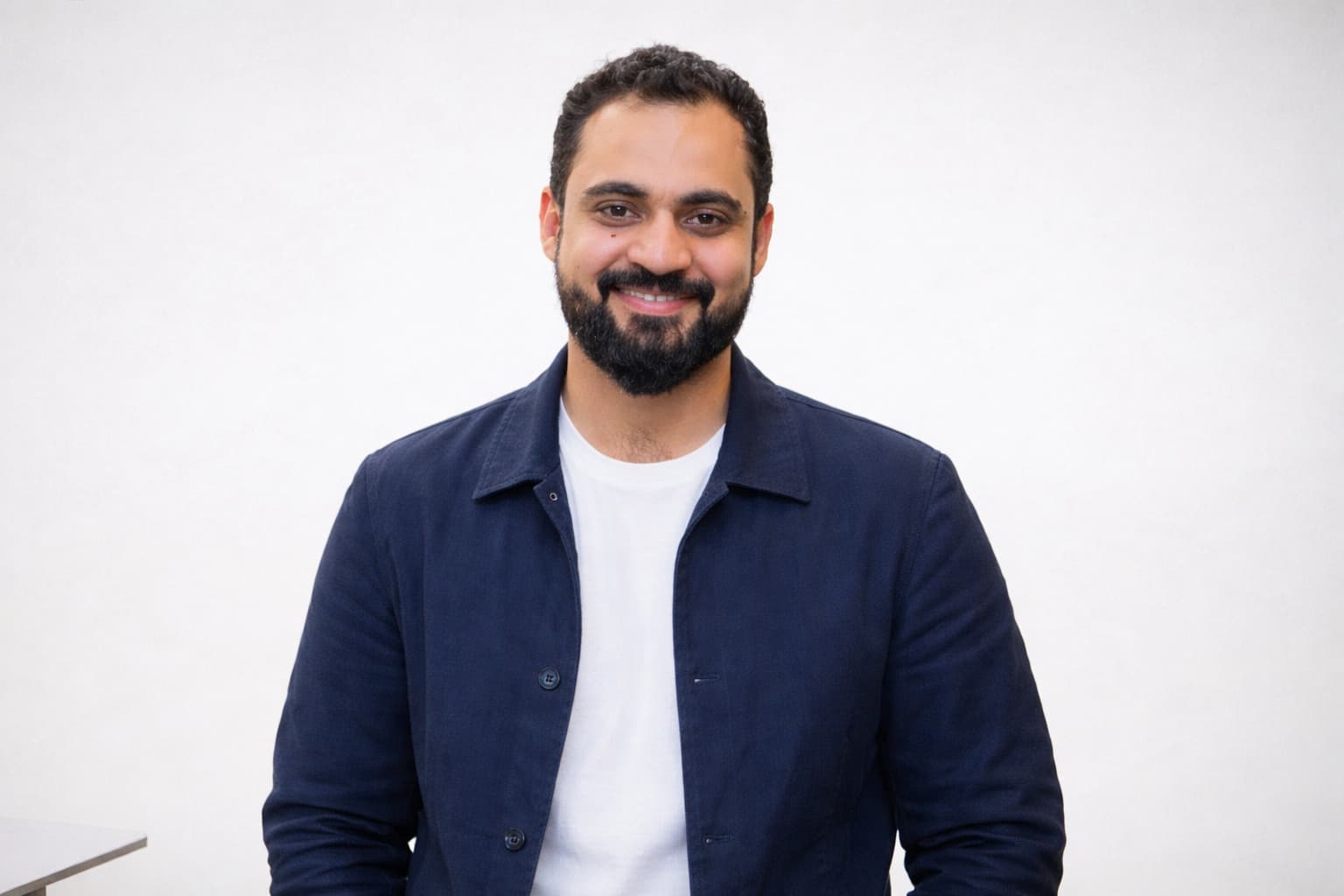
Ali Ahmed · Role
Head of Outreach & Ecosystem Engagement
Digitara — on the UNIDO PAIDAR programme
December 2025 – April 2026 · Concluded
SME Grant Window: Social Sector Solutions
€11,000 – €200,000
Matching grant — not a loan or equity
The institutions
- UNIDO
- the United Nations’ industrial-development agency
- European Union
- the programme’s funder
- PAIDAR
- the programme Ali ran outreach for
- Pakistan
- nationwide founder & SME engagement
The grant
- Instrument
- Matching grant
- Not a loan. Not equity. The enterprise co-invests alongside the programme.
- Co-financing
- Up to 50%
- Rising to 70% for women-led, persons-with-disability-led and transgender-led enterprises.
- Who it was for
- Startups, SMEs & social enterprises
- Enterprises that could build and deliver against the programme’s development mandate.
The programme
- In full
- Poverty Alleviation and Inclusive Development Across Rural Sindh
- Implemented by
- UNIDO — a specialized agency of the United Nations
- Funded by
- The European Union
- In partnership with
- The Government of Sindh
- Programme term
- 2022 – 2027 · five years
- Grants for enterprises in
- Thatta · Sujawal · Badin · Tharparkar · Larkana
- Outreach
- Reaching Pakistan’s founder ecosystem
- Engagement
- Building relationships and driving ecosystem trust
- Convening
- Bringing the right people into the room
- Impact
- Supporting innovation and rural enterprise growth
The programme
A UNIDO initiative,
funded by the EU,
delivered in Pakistan.
PAIDAR supports rural SMEs and enterprises to innovate, grow and create impact through a matching grant mechanism.
Ali Ahmed was engaged through Digitara and worked WITH the UNIDO team to drive outreach, engagement and ecosystem mobilisation across Pakistan.
Where the grants could go
Five districts of rural Sindh.
- Thatta
- Sujawal
- Badin
- Tharparkar
- Larkana
The grant funded enterprises operating in these districts. The outreach that found them ran nationwide — which is the work described on this page.
Focus areas
- Innovation
- Enterprise growth
- Job creation
- Sustainable impact
Supporting rural SMEs and enterprises to build resilient and inclusive value chains.
Eligible sectors
- Health
- Education
- Clean energy
- WASH
- Waste management
- Agriculture
- Communal infrastructure
Ali’s role & mandate
Leading outreach.
Building connections.
Mobilising Pakistan’s
founder ecosystem.
As Head of Outreach & Ecosystem Engagement, Ali Ahmed led the strategy and execution of nationwide outreach, partnerships and engagement to connect innovative enterprises with opportunities and support — working WITH the UNIDO team to strengthen Pakistan’s rural enterprise landscape.
The mandate was simple — reach the right people, build trust, and bring the ecosystem together around opportunity.
On the invitation
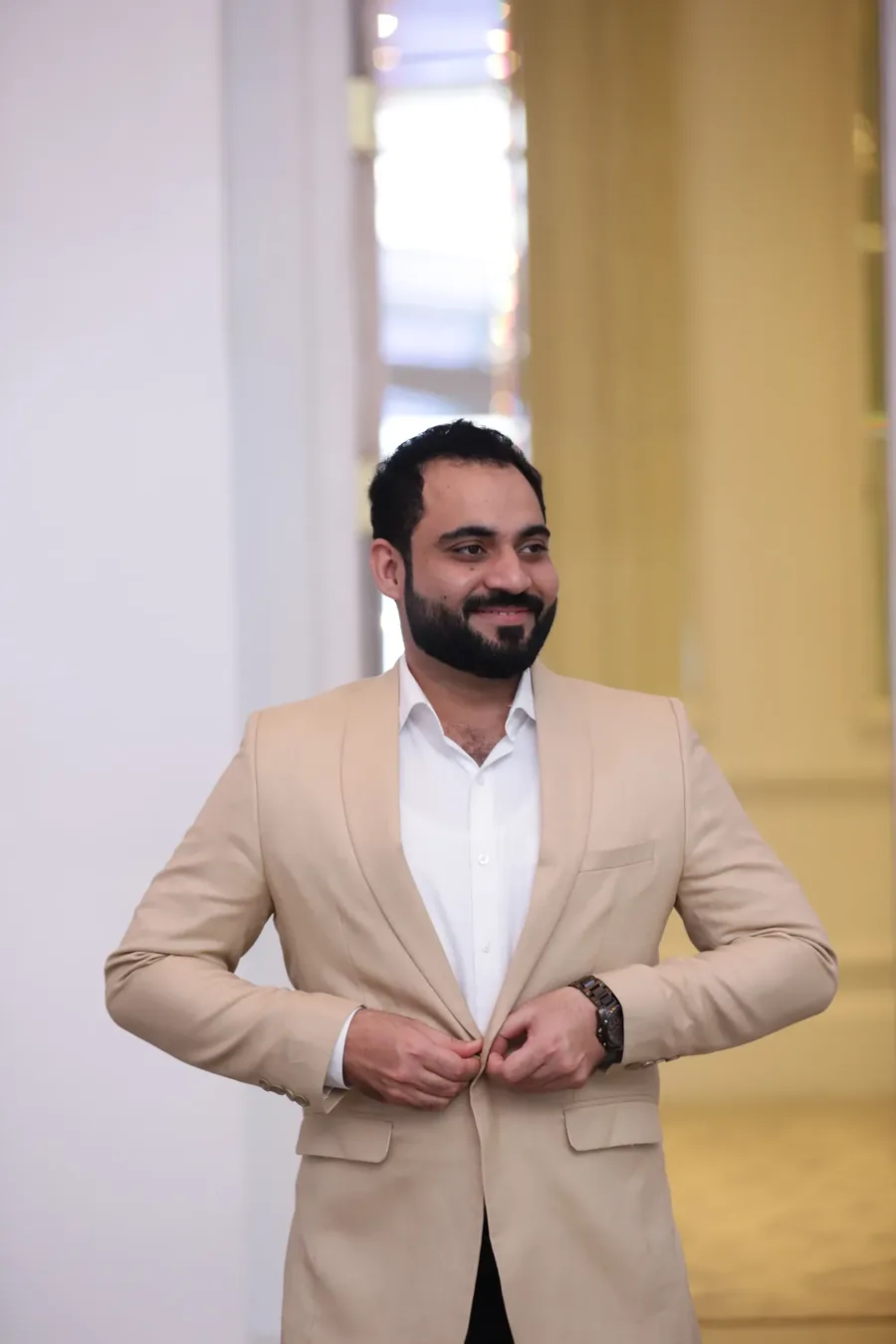
UNIDO’s printed invitation to the Lahore event named two people to RSVP to: its own National Social Sector Expert for PAIDAR, and Ali Ahmed, Head of Outreach & Ecosystem Engagement, Digitara.
The programme put the outreach lead on the door. That is what the role was.
What Ali led
- Outreach strategy
- National outreach strategies to identify and engage high-potential enterprises.
- Partnerships & collaborations
- Relationships with incubators, accelerators, networks and ecosystem organisations.
- Ecosystem engagement
- Connecting stakeholders and facilitating dialogue across the innovation ecosystem.
- Awareness & mobilisation
- Awareness activities and campaigns to reach and attract innovative enterprises.
- Pipeline development
- A robust pipeline of enterprises for guidance, assessment and support.
- Coordination with the UNIDO team
- Working closely WITH the UNIDO team to ensure alignment, execution and impact.
Where the outreach ran: engagement sessions with Pakistan’s national incubation hubs — CMACED, the entrepreneurship centre at Superior University in Lahore, and the Ignite-funded National Incubation Center (NIC) in Karachi.
Ali Ahmed’s mandate on the UNIDO PAIDAR programme was to mobilise Pakistan’s startup and SME ecosystem for its SME Grant Window for social sector solutions. He ran ecosystem-engagement sessions with national incubation hubs — CMACED, the entrepreneurship centre at Superior University in Lahore, and the Ignite-funded National Incubation Center (NIC) in Karachi — and convened two flagship founder events, in Karachi on 13 February 2026 and Lahore on 18 February 2026. He was engaged through Digitara, UNIDO’s contracted outreach partner, and worked with the UNIDO team; he was not employed by UNIDO or the United Nations.
Karachi13 February 2026 · Movenpick Hotel
The first room —
and the UN team
was in it.
The first of the two flagship convenings Ali brought together for the programme — an ecosystem roundtable putting founders, investors and ecosystem leaders in one room with the people running the grant window.
UNIDO in the room
Badar Ul Islam — National Programme Coordinator, UNIDO Pakistan
The person running the EU-funded PAIDAR programme in Pakistan attended in person, with his UNIDO team.
On the panel
Dr Sara Saeed
CEO, Sehat Kahani
Dr Farhan Essa Abdullah
CEO & Chairman, Dr Essa Laboratory
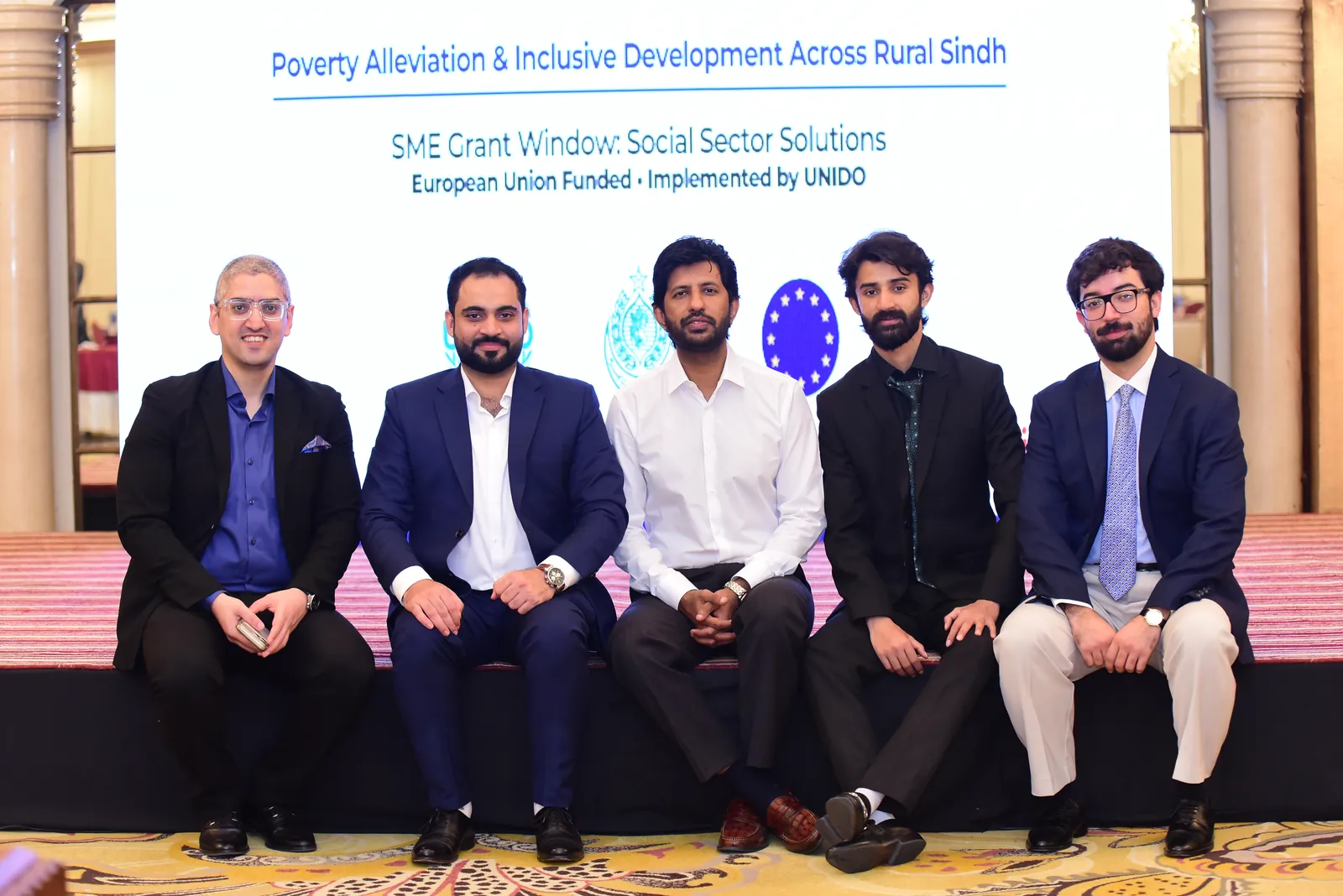
Ali Ahmed with the Digitara team at the Karachi event.
The convening
- Date
- 13 February 2026
- Venue
- Movenpick Hotel, Karachi
- Format
- Ecosystem roundtable and panel
- Convened by
- Ali Ahmed, for the PAIDAR programme
The panel, room and audience photographs are not published here — they were produced under UNIDO’s contract and are UNIDO’s property. The frame above is Ali’s own team.
Who filled the room: healthtech, edtech, fintech, clean energy, agritech, manufacturing — Pakistan’s founders and company leaders. Attendee companies are not named, out of respect for their privacy.
On 13 February 2026 at the Movenpick Hotel in Karachi, Ali Ahmed convened the first of two flagship founder events for the UNIDO PAIDAR programme. The panel featured Dr Sara Saeed, CEO of Sehat Kahani, and Dr Farhan Essa Abdullah, CEO and Chairman of Dr Essa Laboratory. UNIDO was represented in the room by Badar Ul Islam, the National Programme Coordinator for UNIDO in Pakistan, and his team. Named panellists appeared publicly at the event; their presence is a measure of the room Ali convened, not an endorsement.
Lahore18 February 2026 · The Nishat Hotel
The second room —
opened by a UN
panel keynote.
Five days after Karachi, a second convening — this one opened by a member of the UN Secretary-General’s High-Level Panel, with four of Pakistan’s most recognised founders on the stage that followed.
The keynote
Fiza Farhan
CEO, ORA Global
UN Secretary-General’s High-Level Panel on Women’s Economic Empowerment
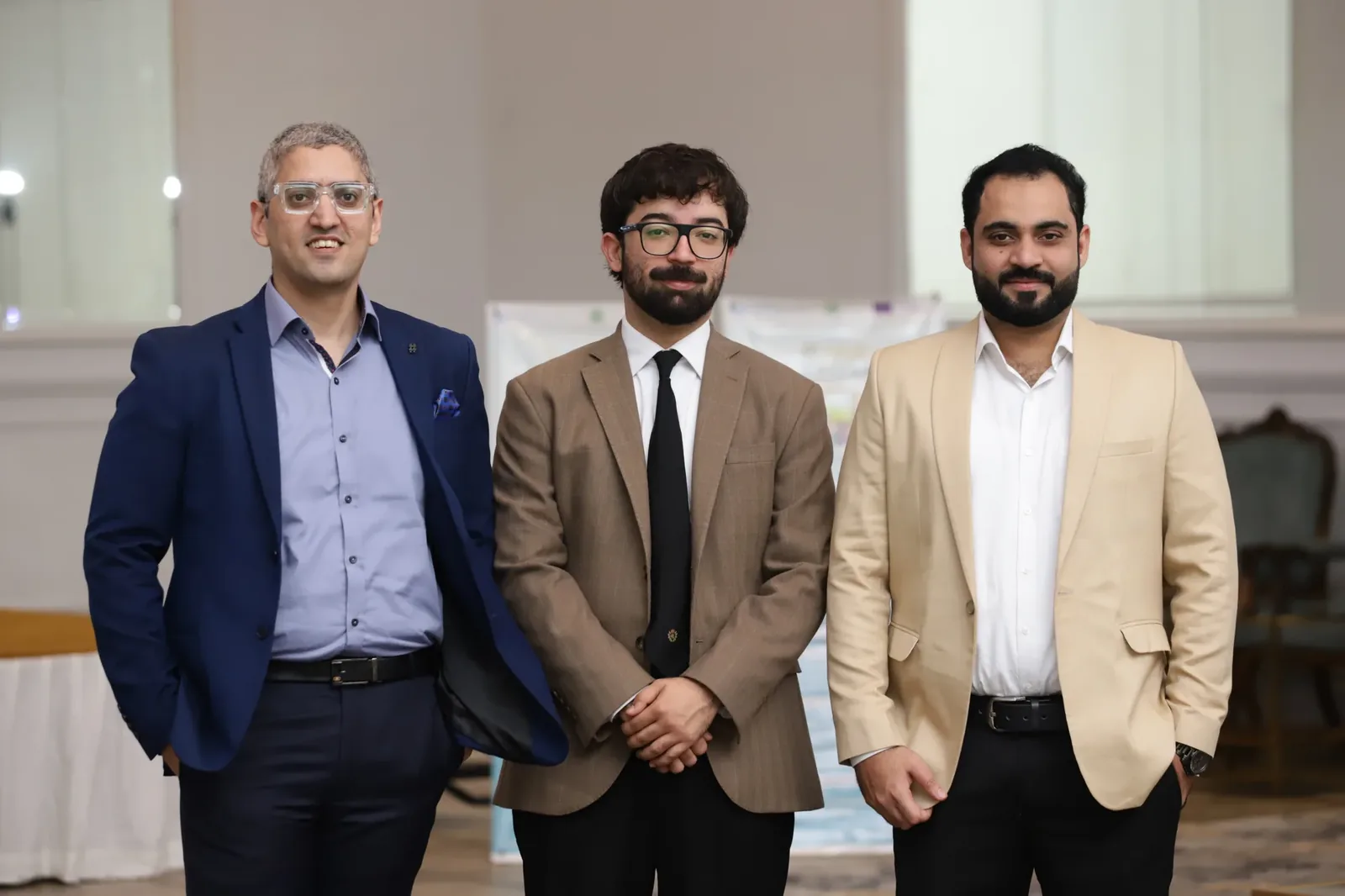
Ali Ahmed with the Digitara team at the Lahore event.
The convening
- Date
- 18 February 2026
- Venue
- The Nishat Hotel, Johar Town, Lahore
- Format
- Keynote, panel and networking
- Convened by
- Ali Ahmed, for the PAIDAR programme
The stage, room and panelist photographs are not published here — they were produced under UNIDO’s contract and are UNIDO’s property. The frame above is Ali’s own team.
On the panel
Keynote
Fiza Farhan
CEO, ORA Global
UN Secretary-General’s High-Level Panel on Women’s Economic Empowerment · Forbes 30 Under 30
Omar Farooq Malik
CEO, Interwood Mobel
Pakistan’s only fully automated furniture manufacturer
Faizan Aslam
Founder & CEO, Bookme.pk
Pakistan’s largest e-ticketing and online travel platform
Badar Khushnood
Co-founder, Bramerz & Fishry
Former Chairman, P@SHA · formerly Google, Twitter and Facebook in Pakistan
Ali Siddiq
Co-founder & CEO, Amal Academy
Career-prep fellowship for Pakistan’s youth · Acumen Fellow
Named panellists appeared publicly at this event — a measure of the room Ali convened, not an endorsement. Attendee companies are not named, out of respect for their privacy.
On 18 February 2026 at The Nishat Hotel in Lahore, Ali Ahmed convened the second of two flagship founder events for the UNIDO PAIDAR programme. Fiza Farhan — CEO of ORA Global, a member of the UN Secretary-General’s High-Level Panel on Women’s Economic Empowerment and a two-time Forbes 30 Under 30 — delivered the keynote and joined the panel, alongside Omar Farooq Malik (CEO, Interwood Mobel), Faizan Aslam (Founder, Bookme.pk), Badar Khushnood (co-founder of Bramerz and Fishry; formerly Google, Twitter and Facebook in Pakistan; former Chairman of P@SHA) and Ali Siddiq (co-founder and CEO of Amal Academy). The UNIDO programme team was present.
Impact & outcomes
Real impact.
Stronger ecosystems.
Lasting change.
Through strategic outreach, meaningful conversations and ecosystem mobilisation, Ali helped bridge the gap between innovation and opportunity — enabling rural enterprises and founders to access the support, networks and resources they need to grow.
National convenings
High-impact roundtables in Karachi and Lahore with key ecosystem leaders.
The impact
- Founders & SMEs
- Engaged
- Across key cities and ecosystems.
- Ecosystem relationships
- Built
- With incubators, accelerators and ecosystem enablers.
- Awareness & outreach
- Scaled
- Through targeted campaigns, engagements and events.
- Ecosystem connections
- Strengthened
- Bringing stakeholders together for collaboration and growth.
It was about connecting the right people, in the right rooms, for the right reasons — to unlock opportunity and create impact where it matters most.
Grant window
€11,000 – €200,000
Matching grant (not a loan or equity)
A collaborative journey
UNIDOEUDigitaraAli Ahmed
Working together for Pakistan’s rural innovation and enterprise growth — UNIDO leading the programme, the European Union funding it, Digitara contracted for outreach, and Ali engaged through Digitara to work with the UNIDO team.
The record — and how to check it
- Two convenings, dated and venued
- Karachi, 13 February 2026, Movenpick Hotel. Lahore, 18 February 2026, The Nishat Hotel, Johar Town.
- Named on UNIDO’s own invitation
- UNIDO’s printed invitation to the Lahore event lists Ali Ahmed — Head of Outreach & Ecosystem Engagement, Digitara — as one of its two RSVP contacts.
- Seven founders and leaders on the panels
- Including a member of the UN Secretary-General’s High-Level Panel on Women’s Economic Empowerment, all named on this page.
- The programme, independently documented
- UNIDO published its own call for this grant window on the UN Global Marketplace; the EU’s external-action service publishes the programme record. Both are linked below.
Ali Ahmed was engaged through Digitara and worked WITH the UNIDO team to drive outreach, engagement and ecosystem mobilisation.
All information is presented in line with public-disclosure guidelines. Specific programme details, company names and confidential information are not publicly disclosed, in respect of privacy and our commitment to trust.
Why it matters
Institutions —
not only companies.
The authority in this chapter is the relationship. Ali Ahmed worked with the UNIDO team on a United Nations, EU-funded programme — trusted, through Digitara, to reach and convene Pakistan’s founder ecosystem for it. To operate alongside a UN team on a national programme, and to put Pakistan’s most respected founders in the room with them, is a credential that speaks for itself.
Set beside the CIRCLE × Gates Foundation and GIZ chapters, it makes one thing plain: this is a record built with international institutions, not only with companies. He is the ecosystem operator an international programme relies on to mobilise Pakistan’s founders.
- The United Nations
- UNIDO implemented PAIDAR. Ali worked with its team on the programme’s outreach.
- The European Union
- The programme’s funder — PAIDAR is an EU-funded development programme.
- The Gates Foundation
- Funded the CIRCLE digital-literacy programme Ali delivered end to end.
- Read the CIRCLE chapter
- The German federal government
- GIZ contracted Ali on its Pakistan–Germany safe-migration programme.
- Read the GIZ chapter
Questions, answered
Clear answers.
Built on truth.
Transparency builds trust. Here are the answers to the most common questions about the UNIDO PAIDAR programme and Ali Ahmed’s role.
What was Ali Ahmed’s role on PAIDAR?
He was Head of Outreach & Ecosystem Engagement for the PAIDAR programme (December 2025 – April 2026), working with the UNIDO team to mobilise Pakistan’s startup and SME ecosystem — running engagement sessions with national incubation hubs and convening founder events in Karachi and Lahore where the ecosystem met the UNIDO programme team.
Did Ali Ahmed work for the United Nations or UNIDO?
He was engaged through Digitara — UNIDO’s contracted outreach and engagement partner — and worked with the UNIDO team on the programme. He was not employed by UNIDO or the United Nations. The accurate framing is that he was the person brought in to run the programme’s outreach, working alongside the UN team.
What does the UNIDO PAIDAR chapter prove about Ali Ahmed as an operator?
Three things, each checkable on this page. An international programme trusted him with its outreach in Pakistan — UNIDO’s own printed invitation to the Lahore event names him, with his Digitara title, as one of its two RSVP contacts alongside UNIDO’s National Social Sector Expert. He could reach the founder ecosystem on demand — category-leading founders sat on the panels in Karachi and Lahore. And he ran the convening end to end: outreach strategy, engagement sessions with national incubation hubs, partnerships across the ecosystem, and two founder events delivered with the UNIDO programme team in the room. No attendance or outcome figures are claimed anywhere on this page; the evidence offered is who was in the room.
Has Ali Ahmed worked on United Nations or EU-funded programmes?
Yes — PAIDAR is both. It is implemented by UNIDO, a specialized agency of the United Nations, and funded by the European Union. Ali Ahmed was Head of Outreach & Ecosystem Engagement on it from December 2025 to April 2026, engaged through Digitara and working with the UNIDO team — not employed by UNIDO or the UN. He has also delivered a Bill & Melinda Gates Foundation–funded digital-literacy programme at CIRCLE Women Association, and consulted for GIZ, the German federal government’s international development agency.
Who did Ali Ahmed convene at the events?
In Lahore, Fiza Farhan (CEO, ORA Global; UN Secretary-General’s High-Level Panel on Women’s Economic Empowerment; Forbes 30 Under 30) keynoted and joined a panel with Omar Farooq Malik (Interwood Mobel), Faizan Aslam (Bookme.pk), Badar Khushnood (Bramerz/Fishry; former P@SHA Chairman) and Ali Siddiq (Amal Academy). In Karachi, the panel featured Dr Sara Saeed (Sehat Kahani) and Dr Farhan Essa Abdullah (Dr Essa Lab). UNIDO’s National Programme Coordinator, Badar Ul Islam, and the UNIDO team were present. These are people Ali convened for the programme — they spoke at a public event, and none of them is presented as endorsing him.
How did Ali Ahmed reach founders for a programme most of them had never heard of?
Through the ecosystem rather than through advertising. His mandate covered national outreach strategy to identify high-potential enterprises, relationships with incubators, accelerators and ecosystem organisations, awareness and mobilisation activity, and pipeline development — with the events themselves as the point where the ecosystem and the UNIDO team met face to face. The panels are the visible result of that work.
Can Ali Ahmed mobilise a founder ecosystem for a programme outside Pakistan?
The convening itself was in Pakistan — Karachi and Lahore — as were the national programmes behind it. What transfers is the method: working out who a programme actually needs in the room, reaching those people directly instead of advertising at them, briefing them on an unfamiliar institutional offer, and getting category leaders to give it a stage. He works in English, and the institutions he has operated with — UNIDO, the European Union, the Gates Foundation, GIZ — are international, even where the delivery was national.
What kind of role does this record fit?
Accelerators, incubators, innovation agencies and development programmes that need someone to reach founders and get them into the room — particularly where the programme is credible but unknown to the people it exists to serve, which is exactly what PAIDAR was in Pakistan’s startup ecosystem. It is ecosystem and outreach work: sourcing, partnerships, convening and stakeholder management, delivered to an international institution’s standard.
What is the PAIDAR programme?
PAIDAR — Poverty Alleviation and Inclusive Development Across Rural Sindh — is a five-year programme implemented by UNIDO and funded by the European Union, in partnership with the Government of Sindh. It runs an SME Grant Window for social sector solutions offering matching grants of €11,000–€200,000 (not loans, not equity) to startups, SMEs and social enterprises, with up to 50% co-financing, rising to 70% for women-led, PWD-led and transgender-led enterprises. The grants fund enterprises operating in five districts of rural Sindh: Thatta, Sujawal, Badin, Tharparkar and Larkana.
What is UNIDO?
UNIDO — the United Nations Industrial Development Organization — is a specialized agency of the United Nations that promotes inclusive and sustainable industrial development. It is headquartered in Vienna, was established in 1966 and became a UN specialized agency in 1985, and has 173 member states.
Was the PAIDAR grant a loan or an equity investment?
Neither. The SME Grant Window for social sector solutions offered matching grants of €11,000–€200,000 — the enterprise co-invests alongside the programme rather than repaying a loan or giving up ownership. Co-financing ran up to 50%, rising to 70% for women-led, persons-with-disability-led and transgender-led enterprises.
Why aren’t the attendee companies named?
The founders and companies who attended the Karachi and Lahore events are not published, out of respect for their privacy. Named panellists appear because they spoke publicly at a public event; the room itself stays unnamed. The same discipline applies to the programme’s total budget and to any confidential programme material.
How does this connect to Ali Ahmed’s other work?
It is the United-Nations half of his institutional record. Alongside the CIRCLE × Gates Foundation chapter and the GIZ chapter, it shows Ali has operated with international agencies and governments — the UN, the EU, the Gates Foundation and the German federal government — as the ecosystem operator who can mobilise Pakistan’s founders for an institutional mission.
Truth. Transparency. Trust.
This page is built on verified facts and public information only. No private or confidential data is disclosed.
Trust is the foundation of every ecosystem. Transparency is how it grows.
Check it yourself
Primary sources for the programme, from the institutions that run it.
All information presented here follows public-disclosure guidelines. Specific programme details, company names and confidential information are not publicly disclosed, in respect of privacy.
A note on the programme: the PAIDAR programme is financed by the European Union and implemented by UNIDO in partnership with the Government of Sindh. This page is Ali Ahmed’s own account of work he carried out for it through Digitara. The views expressed here are his own and can in no way be taken to reflect the official opinion of the European Union, UNIDO or the United Nations, none of which has reviewed or endorsed this page.