People
Capability & Confidence
Women gained digital skills, confidence and exposure that continue to open doors to economic opportunities.

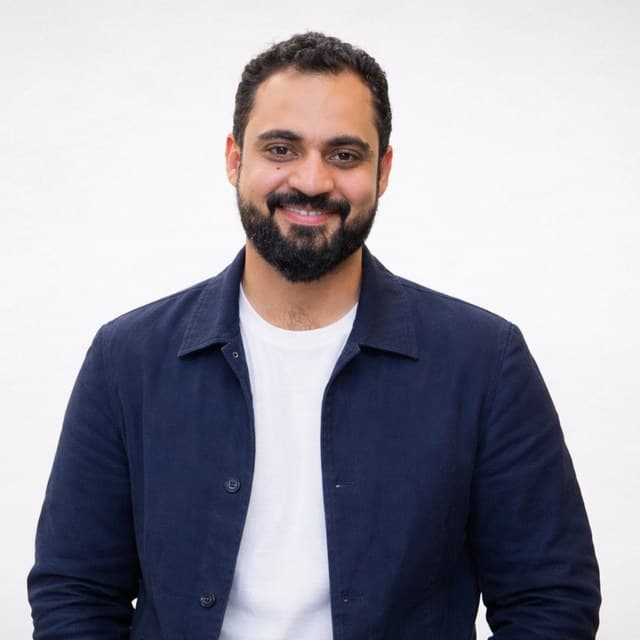
Ali Ahmed
Program Manager & Business Intelligence Lead · Feb – Oct 2023
CIRCLE Women Association · Gates Foundation–Funded DLP
Ali Ahmed delivered — and proved— a Bill & Melinda Gates Foundation–funded Digital Literacy Programme, bringing 10,000 women into the digital economy and building the monitoring-and-evaluation systems that measured its impact and left CIRCLE stronger.
Ali Ahmed delivered — and proved — a Bill & Melinda Gates Foundation–funded Digital Literacy Program at CIRCLE Women Association, bringing 10,000 women into the digital economy through digital, financial, business and life skills, and building the monitoring, evaluation and learning systems that measured its impact and left CIRCLE stronger. He worked at CIRCLE, the implementing partner, not the foundation. Aligned to UN SDGs 5, 8 and 4.
10,000
Women Reached
Digital, financial, business & life skills
8
Months
Feb – Oct 2023 · Concluded
1
Integrated MEL System
Designed, built & implemented
Legacy
Systems still run
In use after Ali’s tenure
Funded by
Bill & Melinda Gates Foundation
Aligned to SDG 5 · 8 · 4
Funded by

Implemented by
 CIRCLE Women Association
Ali Ahmed’s role
Program Manager & Business Intelligence Lead
02The Challenge We Set Out to Solve
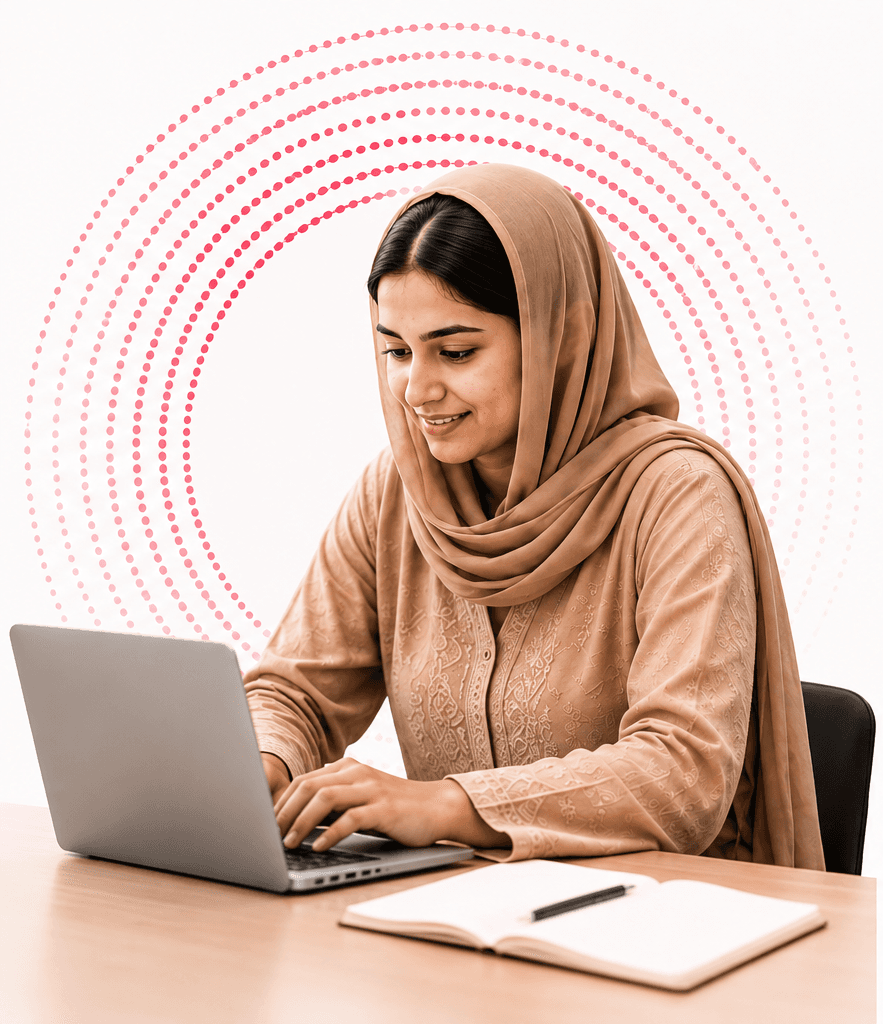
Across Pakistan, a woman can have a smartphone in her hand and still lack the confidence, skills or financial tools to turn that access into opportunity.
Three barriers were holding them back.
1. Digital Gap
Limited digital skills and confidence to use devices for learning, communication and business.
2. Financial Exclusion
Low financial literacy and limited access to formal financial tools and services.
3. Economic Barriers
Few income opportunities, weak market linkages and little access to digital markets.
When women gain skills and financial confidence, everything changes.
The programme was designed to move women from barriers toward capability, participation and lasting opportunity.
Low digital and financial capability, limited access and low confidence restrict women from participating in the digital economy.
Practical, hands-on learning builds digital literacy, financial literacy and business skills — and the confidence to use them.
Women engage more confidently with digital tools, financial services and online platforms.
Participation opens pathways toward income, digital markets and financial independence — for her and her family.
This is inclusion in action.
Empowered women. Stronger families. Thriving communities. A more equitable Pakistan.
03What We Built to Drive Change
Ali Ahmed designed and delivered a Bill & Melinda Gates Foundation–funded Digital Literacy Programme that empowers women with the skills, confidence and tools to participate fully in the digital and financial world.
Women-Centred
Built for women, shaped around their needs and real-life challenges.
Practical & Relevant
Hands-on learning in digital skills, financial literacy and online safety.
Outcome Driven
Focused on real behaviour change and measurable impact.
Sustainable by Design
Systems, tools and partnerships that create long-term value.
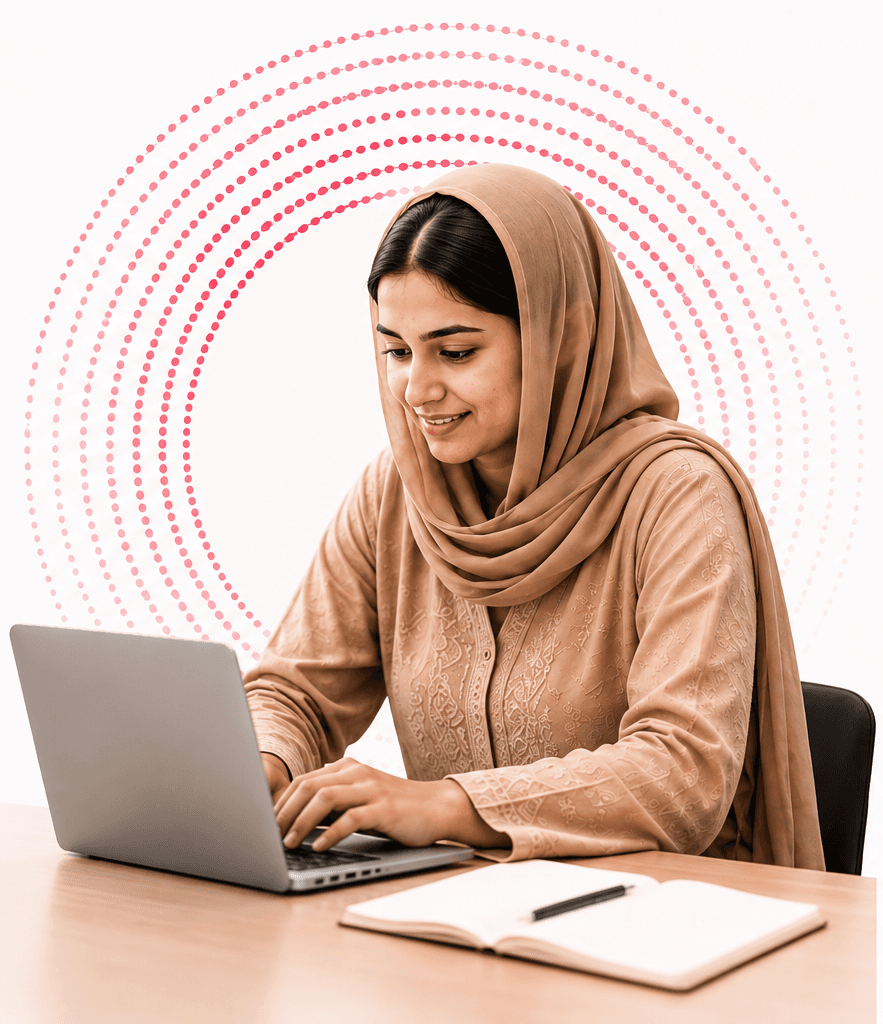
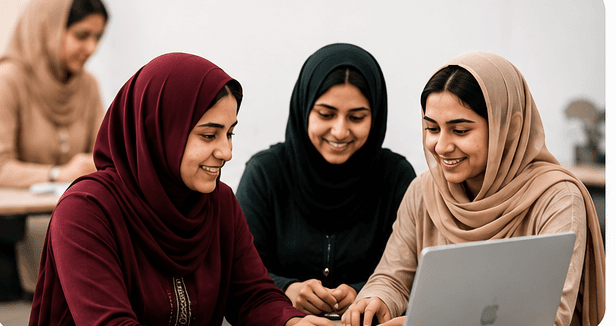
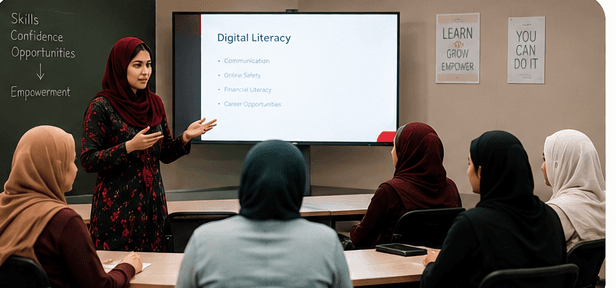
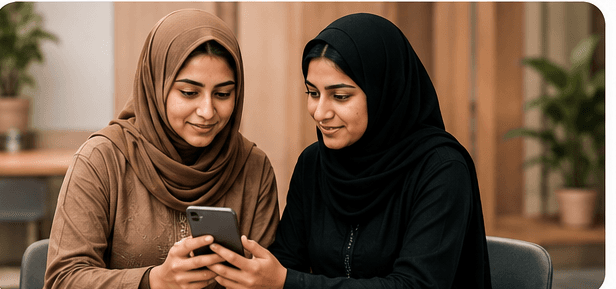
Our Approach
Every component of the programme was purposefully designed and executed to ensure learning translates into opportunity.
Structured modules on digital literacy, financial education, communication and online safety.
Providing access to devices, internet resources and digital platforms.
Continuous guidance and peer support to build confidence and capability.
Real-life tasks and projects to help women apply skills in daily life and work.
Connecting women to income opportunities, services and digital marketplaces.
04The Impact / Outcomes
A programme that empowered women with skills, confidence and tools — and helped them turn those skills into real opportunities, income and financial independence.
10,000+
Women Reached
From diverse communities across Pakistan, empowered through the programme.
4
Skill Areas
Digital literacy, financial literacy, communication skills & online safety.
Digital + Financial Inclusion
Women gained the skills and confidence to participate in the digital and financial world.
Income Generation
More women started earning independently and supporting their families with dignity.
+25%
Increase in Online Business Ventures
More women launched or expanded online businesses after the programme.
From learning digital tools to using them for economic opportunity.
More than training — a measurable shift: women moving from new skills to real income, financial inclusion and online business.
The Transformation Journey
Limited access to digital tools, financial services and opportunities.
Equipped with digital, financial and communication skills.
Gained confidence and access to platforms, networks and services.
Earning income, starting businesses and contributing to the digital economy.
Creating a better future for themselves, their families and their communities.
Real impact. Measurable change. Lasting legacy.
10,000 women empowered. Countless futures transformed.
05In Their Own Businesses
Behind the figures are women who launched and grew real businesses after the Digital Literacy Program Ali delivered — reaching customers online, adopting digital payments and earning income. A sample of first-party programme case studies.
Grew a clothing and accessories business by reaching customers on WhatsApp Business, Facebook and Instagram.
Built a brand and logo for a boutique, learned to win customers online, and adopted digital payments.
Took a fitness-coaching venture online — Facebook Marketplace, Instagram Business and WhatsApp Business — and now teaches students online.
Launched a stitching business, running all of its social channels, and reports earning around PKR 40,000 a month.
Started an online cosmetics business with about PKR 5,000 of stock and turned a profit in the first week.
Moved a home food business online and took 15–16 orders in its first three weeks.
First-party programme case studies
Individual outcomes as reported by participants of the Digital Literacy Program — shown as real examples, not aggregate statistics.
06Behind the Impact
Beyond delivery. Beyond numbers. Systems that last.
Ali’s contribution went far beyond programme delivery. He designed and strengthened the systems that made large-scale impact measurable, manageable and sustainable.
More than implementation
True impact architecture
From planning to measurement, Ali built the foundations that ensured the programme created real change — and could continue long after the project ended.

ALI’S ROLE
Programme Systems & Implementation
01 — Programme Delivery
Translating objectives into structured plans and driving effective, on-ground implementation.
02 — MEL & Data Systems
Designing and implementing an integrated Monitoring, Evaluation & Learning (MEL) system to track delivery, outcomes and programme performance.
03 — Stakeholder Coordination
Working with internal teams, partners and implementing stakeholders to align goals and ensure successful delivery.
04 — Operational Intelligence
Turning programme data into actionable insights for better decision-making, reporting and resource optimisation.
Systems thinking.
People focus.
Lasting impact.
Bridging programme goals with practical systems and data.
Designing systems that support teams, learners and communities.
Building data infrastructure that proves impact and guides decisions.
Creating systems that strengthen institutions for the long term.
07How We Proved It
Impact is real when it is measured, understood and used to make better decisions.
Ali designed and implemented an integrated Monitoring, Evaluation & Learning (MEL) system that captured data across the entire programme lifecycle — from enrolment to outcomes — creating a single source of truth for learning and decision-making.
Measurement isn’t just administration. It’s accountability.
Built for clarity.
Designed for impact.
10,000
Women Reached
4
Skill Areas
25%
Increase in Online Business Ventures
Stronger
Digital & Financial Inclusion
Income Generation
Enhanced
Progress Over Time
Cumulative women reached
Outcome Snapshot
Key outcome highlights
Single Source of Truth
Unified data. Real-time insights. Smarter decisions.
40%
Reduction in reporting time
20%
Improvement in resource allocation
Impact in Action
40%
Reduction in reporting time
Automated dashboards and streamlined data flows.
20%
Improvement in resource allocation
Data-informed decisions that maximised impact.
Real-time visibility
Live dashboards enabled quicker course corrections and stronger programme management.
Data quality & accountability
Built validation layers and data protocols to ensure accuracy, integrity and trust.
Learning that continues
Insights are documented, shared and used to improve future programmes and policies.
The actual system
Sanitised views of the live Power BI MEL system Ali built at CIRCLE — a working snapshot from his 2023 tenure, while data collection was still ongoing. Proof of the system and its rigour across the ONC, OGC and PMC cohorts.
Participant Overview
Power BI · CIRCLE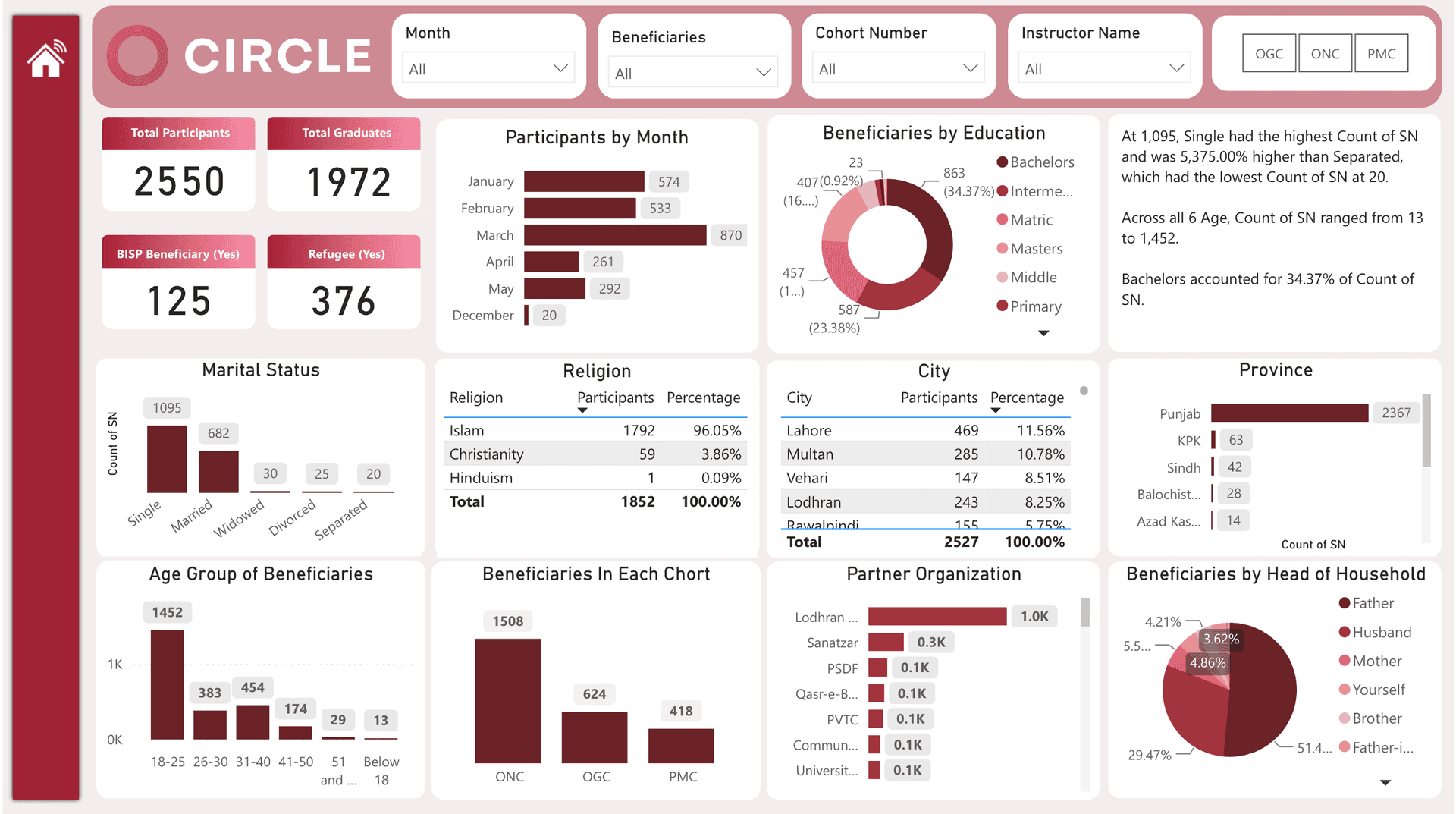
Who the cohorts were — enrolment and graduation, education, geography, cohorts and the partner organisations that delivered on the ground.
Reach & Inclusion
Power BI · CIRCLE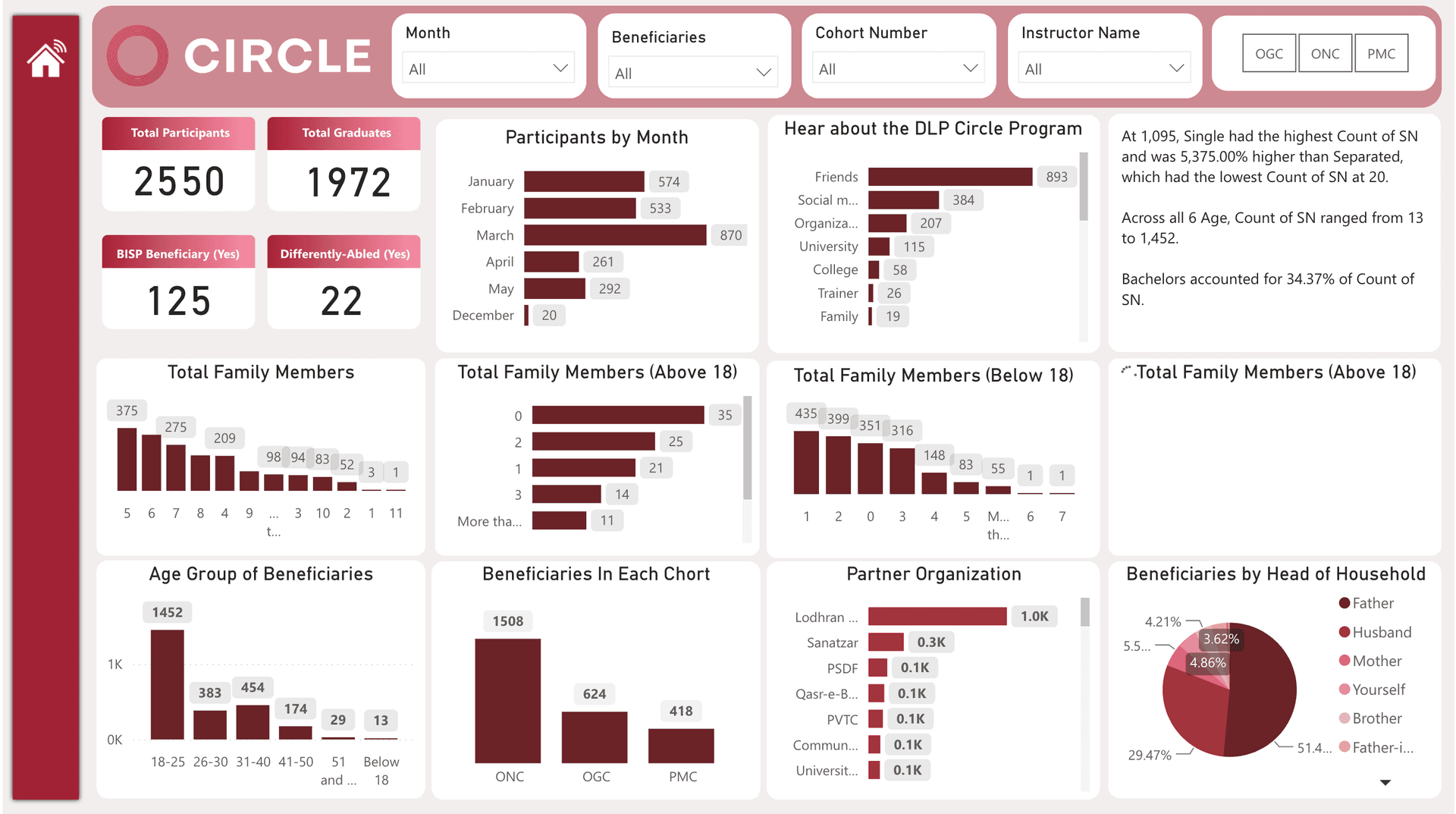
Depth of inclusion — household reach and acquisition channels, and how far the programme reached into marginalised groups.
Digital Inclusion
Power BI · CIRCLE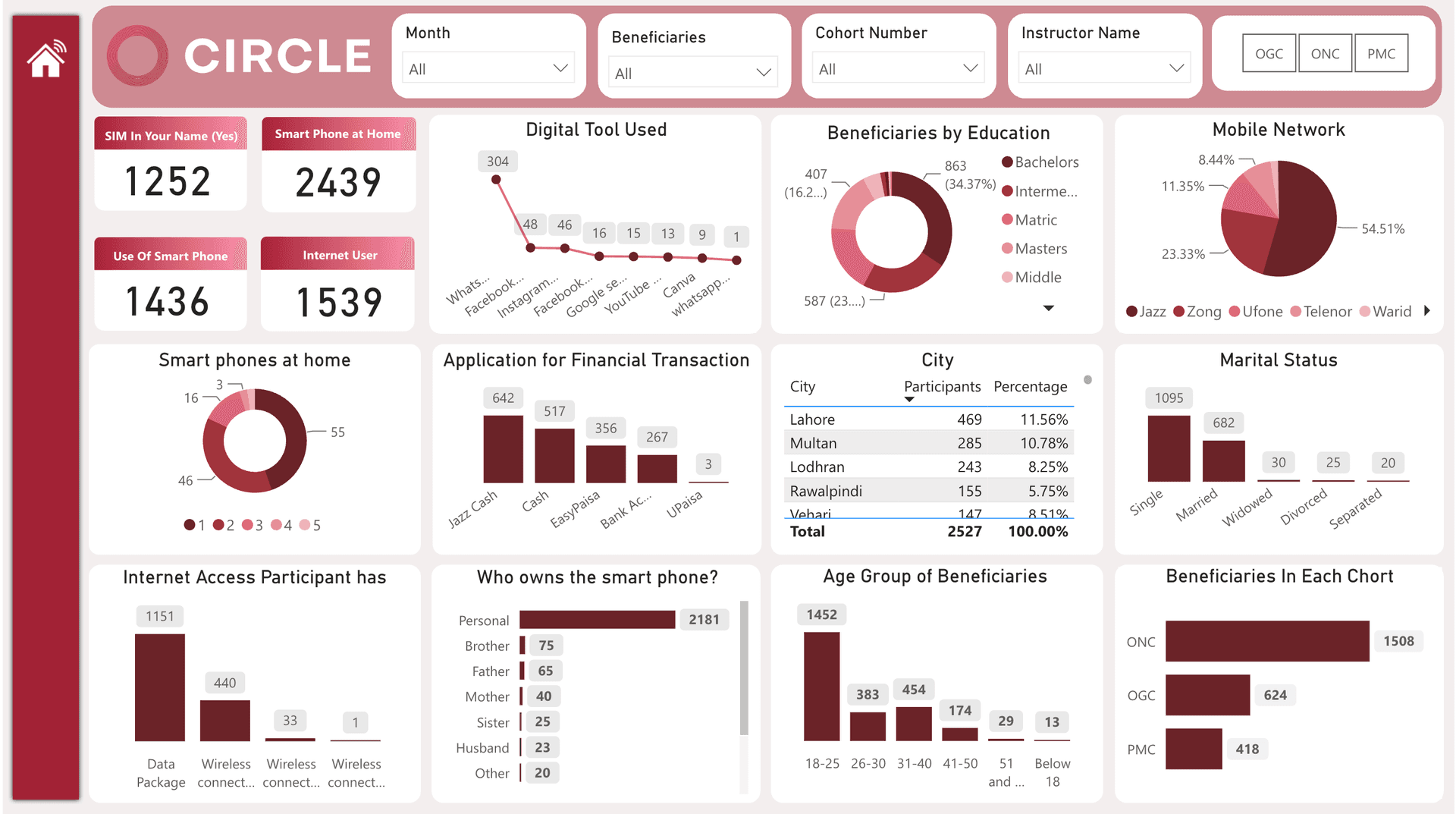
Digital access and adoption — SIM and smartphone ownership, internet use, and the tools women actually put to work (WhatsApp, Facebook, Instagram).
Financial Inclusion
Power BI · CIRCLE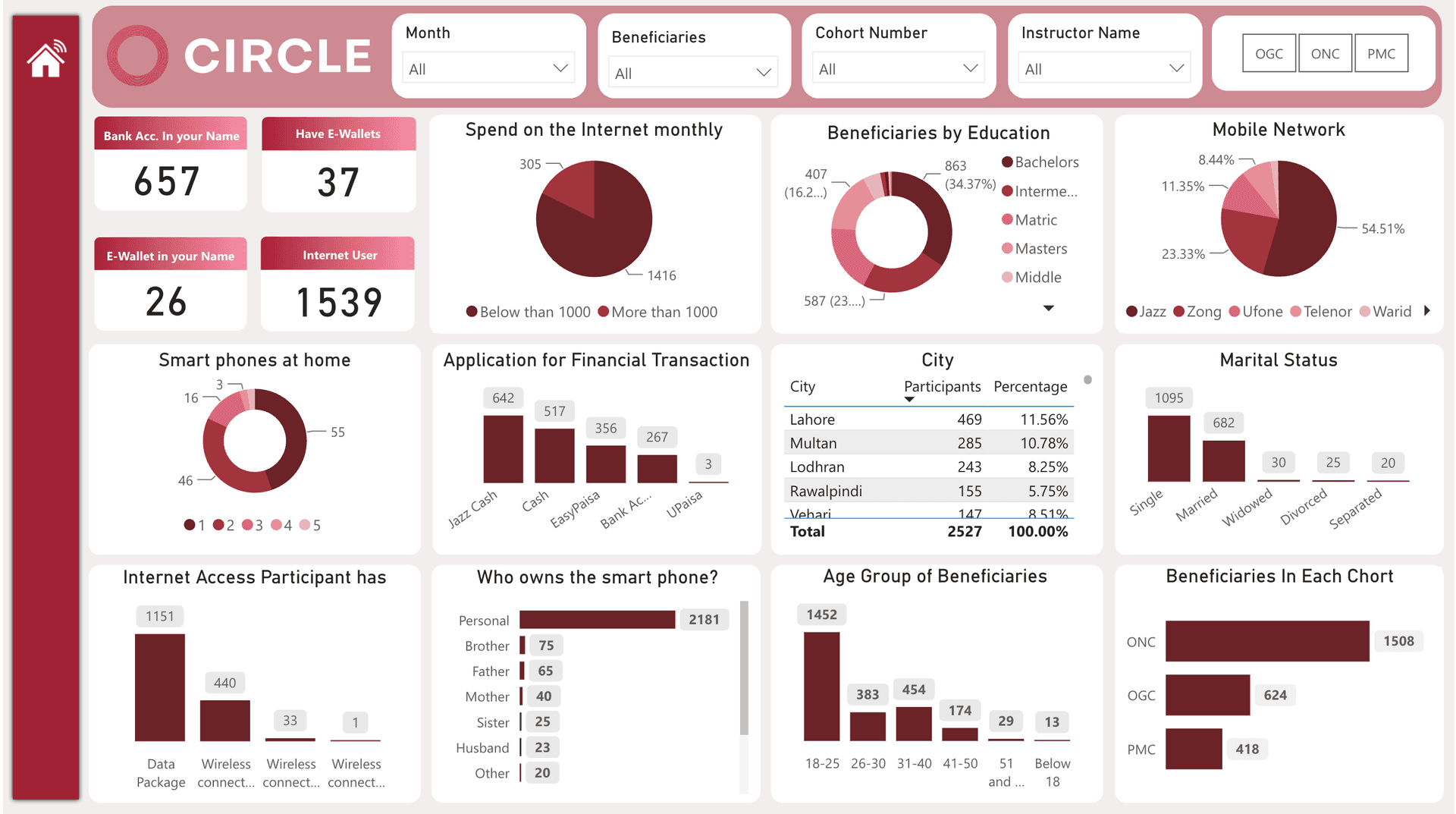
Financial access — bank accounts and mobile wallets in women’s own names, and the apps they use to transact (JazzCash, EasyPaisa, bank).
Business Outcomes
Power BI · CIRCLE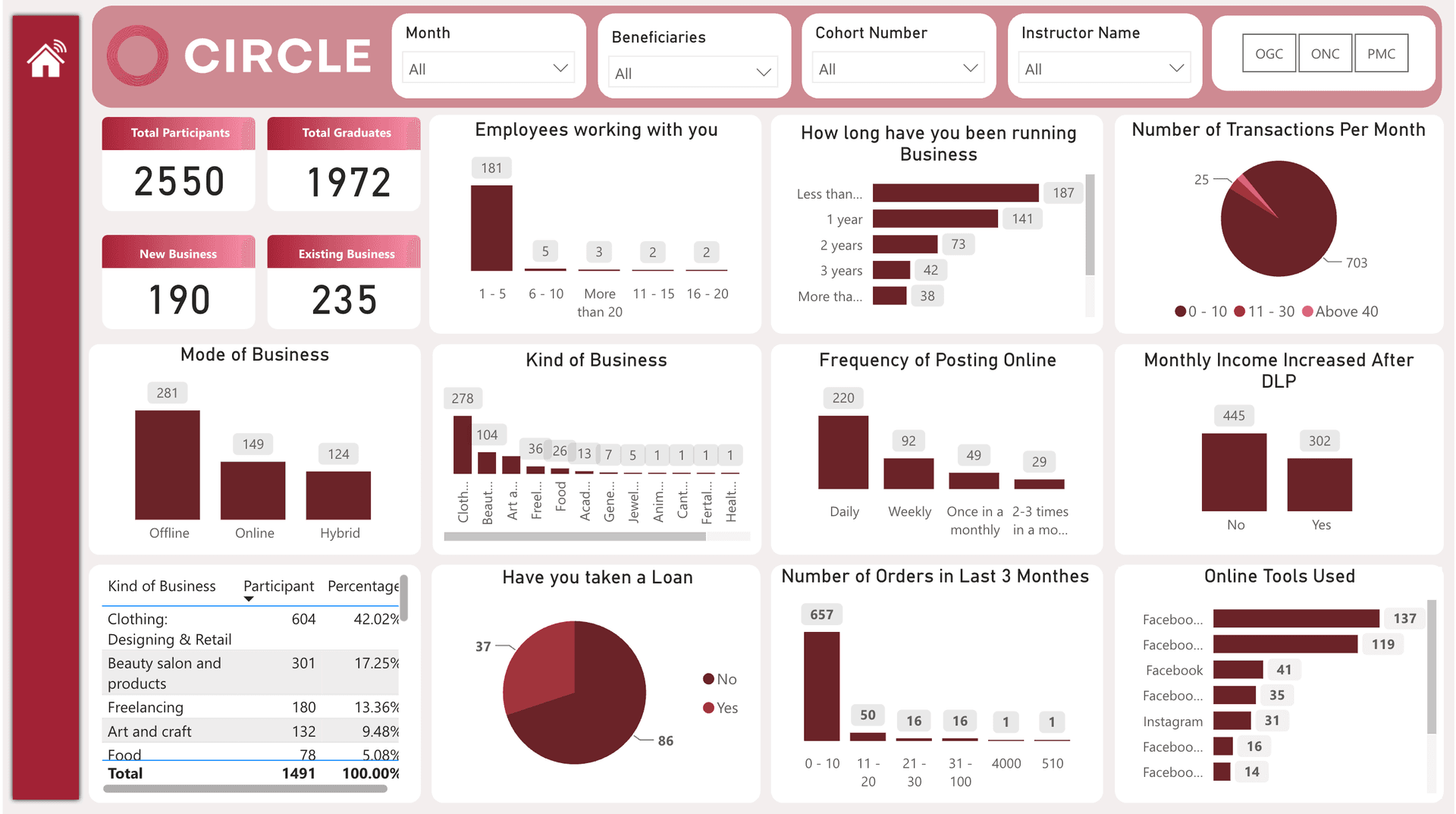
The payoff — new businesses started, income change after the programme, the kinds of business women run, and their orders online.
Aggregate, sanitised figures only — no personal data. A 2023 in-tenure snapshot, not final programme totals.
01. Define
Clear indicators aligned to programme goals and outcomes.
02. Collect
Standardised tools and digital forms for consistent, accurate data collection.
03. Manage
Centralised database with validation rules and secure data management.
04. Analyse
Dashboards and analytics turning data into meaningful insights.
05. Learn
Evidence used for reflection, adaptation and continuous improvement.
06. Act
Insights translated into action for better results and greater impact.
Systems we build today,
change lives tomorrow.
This MEL system continues to support transparent reporting, smarter decisions and greater impact — long after the programme ends.
Evidence-led planning and implementation.
Shared data, shared goals, shared outcomes.
Building an inclusive, digital and empowered Pakistan.
08Beyond the Programme
What we built together did not end with the project. It became part of people, systems and opportunities that continue to grow and create impact.
Sustainable impact is not about a moment in time, it’s about what lives on.
Capability & Confidence
Women gained digital skills, confidence and exposure that continue to open doors to economic opportunities.
Stronger Systems
The organisation now has stronger MEL systems, real-time dashboards and evidence-led decision making.
Scalable Impact
A replicable model and a robust data foundation that can power future programmes and partnerships.
What Remained
Lasting Change in Lives
10,000 women equipped with skills that continue to improve their lives and their communities.
Stronger Institutional Capacity
Integrated systems and processes that strengthen planning, monitoring and decision-making.
Evidence That Endures
A single source of truth that continues to inform strategies, reports and future investments.
Built to Be Replicated
A practical model that can be adapted and scaled to reach more women across Pakistan.
The Ripple Effect
Change that spreads. Impact that multiplies.
One woman learns
One family benefits
One community rises
One system strengthens
One nation moves forward
We didn’t just deliver a programme. We built the foundation for what’s next.
People. Systems. Evidence. Opportunity.
10,000+
Lives touched. Futures unlocked.
Stronger Systems
Built for transparency, accountability and scale.
Lasting Impact
A legacy that will continue to grow.
09What This Work Represents
This work reinforced a simple belief that continues to guide how I build and lead: technology creates greater value when it combines access, inclusion, evidence and systems that can scale.
Technology is not just infrastructure. It is a tool for access, opportunity and measurable change.
Building practical, scalable digital solutions that solve real problems and drive efficiency.
Ensuring more people — especially women and underserved communities — have the skills, access and confidence to thrive in the digital economy.
Using data, monitoring and evaluation to prove impact, improve decisions and build trust with stakeholders.
Strengthening institutions, systems and partnerships so change lasts beyond any single programme.
The programme ended. The journey continues.
If you are looking to build inclusive digital solutions, strengthen systems or drive measurable impact, let’s build something that matters — together.
Thank you for exploring this work.
10Frequently Asked Questions
As Program Manager & Business Intelligence Lead (February–October 2023) he delivered the Bill & Melinda Gates Foundation–funded Digital Literacy Program end-to-end and built the monitoring-and-evaluation systems that measured its impact — proving the outcomes and leaving CIRCLE stronger.
No — and he never claims to be. The Gates Foundation funded the Digital Literacy Program; CIRCLE Women Association implemented it; Ali worked at CIRCLE, the implementing partner. The honest framing is that he delivered a Gates Foundation–funded programme.
Women’s economic empowerment (WEE) is enabling women to participate in, and benefit from, economic activity on equal terms. Ali’s Digital Literacy Program advanced it by closing the digital gender gap — giving 10,000 women the digital, financial and business skills to access the digital economy, generate income and start online businesses.
Primarily SDG 5 (Gender Equality), SDG 8 (Decent Work and Economic Growth) and SDG 4 (Quality Education), and it supports SDG 1 (No Poverty) and SDG 10 (Reduced Inequalities). Digital and financial inclusion sits at the intersection of these goals.
Ali’s Digital Literacy Program trained 10,000 women across four skill areas — digital literacy, financial literacy, business skills and life skills. That is his programme deliverable, distinct from CIRCLE’s organisational scale of 145,000 women across 92 cities.
No. 145,000 women across 92 cities is CIRCLE Women Association’s organisational reach. Ali’s Gates Foundation–funded programme was a distinct 10,000-woman initiative within that wider ecosystem. The two numbers are kept separate.
MEL is the development-sector discipline of measuring whether a programme actually works. Ali designed and built an integrated MEL system for the DLP: automated data pipelines, real-time dashboards and documented reporting SOPs tracking enrolment, completion, skills, income and business-creation outcomes for CIRCLE and the funder — a single source of truth.
By replacing manual, paper-based measurement with automated real-time dashboards and data pipelines (Power BI, SQL, Google Sheets), giving CIRCLE and the Gates monitoring team live visibility into outcomes. Reporting time fell 40% and resource-allocation efficiency improved 20% — evidence that drove decisions, not a tech demo.
They kept running. Ali deliberately built on tools CIRCLE’s own team could maintain and documented the workflows as standard operating procedure, so the dashboards and pipelines survived his departure. That lasting institutional capacity is the chapter’s signature outcome.
Sadaffe Abid founded and leads CIRCLE — a Karachi social entrepreneur, former COO/CEO of the Kashf Foundation (Pakistan’s pioneering women’s microfinance institution) and Vice Chairperson of the Pakistan Microfinance Network. Ali reported to CIRCLE leadership and, through them, into the Gates Foundation’s monitoring framework.
A Pakistani women-focused organisation working on women’s economic empowerment and digital inclusion, reaching 145,000 women across 92 cities. It was the implementing partner for the Gates Foundation–funded Digital Literacy Program that Ali Ahmed delivered.
The headline figures — 10,000 women, a 25% increase in online business ventures, a 40% reduction in reporting time, a 20% gain in resource-allocation efficiency — are reconciled from Ali’s record and are programme-attested rather than independently audited. The programme itself — and the Gates Foundation as its funder — is publicly documented on CIRCLE’s own website.
Yes. First-party programme case studies record women who built businesses after the Digital Literacy Program — for example R&S Collection, a clothing business in Karachi that grew by reaching customers on WhatsApp Business, Facebook and Instagram; Beauty Kross, an online cosmetics business in Muzaffargarh started with about PKR 5,000 that turned a first-week profit; and Khaan Samaan, a home food business that moved online and took 15–16 orders in its first three weeks. These are individual, programme-attested outcomes, not aggregate figures.
That he works at the intersection of technology, inclusion, evidence and ecosystem building: he delivered a Gates-standard, SDG-aligned women’s inclusion programme and built the MEL systems that proved and sustained its impact — rare development-sector credibility on top of a technologist’s core.
It is the economic-inclusion half of a women-centred throughline: at Wonder Women he co-founded femtech for women’s health; at CIRCLE he delivered women’s economic empowerment and measured it. The same evidence discipline carries across both.
Yes. At CIRCLE he delivered a Bill & Melinda Gates Foundation–funded women’s digital- and financial-inclusion programme end-to-end and built its monitoring, evaluation and learning (MEL) systems — funder-standard delivery, impact measurement, institutional capacity building, multi-stakeholder (field-to-funder) management and SDG alignment. It is what makes him a technologist who also carries development-sector credibility.